

TL;DR
|
Revenue pressure has increased for hotels as demand patterns shift quickly across all markets. Hotels now need faster pricing choices that use market data and clear signals from guests. In fact, the global demand for hotel revenue management systems reached $10.50 billion in 2024 as operators adopted automation. Research shows the market may reach $29.43 billion by 2031 as more hotels adopt smarter tools.
Modern revenue management hotel software uses internal and external data to support stronger pricing strategies for every property. A revenue manager gains clearer visibility, quicker decisions, and tighter control over room revenue across channels. These tools support dynamic pricing and give hotels a reliable management system to maximize revenue each day.
This guide explains how a strong revenue strategy platform works and how ampliphi RMS supports these needs.
What Is Revenue Management Hotel Software?
A hotel revenue management software is a system that helps hotels forecast demand, automate pricing, and manage room inventory across seasons, channels, and room types. The system draws from market trends, booking history, occupancy patterns, and competitor data points to set optimal rates.
It extracts data from multiple sources and applies data-driven decision making to recommend ideal pricing strategies. The software then pushes rate changes automatically to all booking channels and supports effective revenue management.
Many hotels see revenue growth of up to 35% after using such systems because they adapt quickly to demand fluctuations. This form of hotel revenue management gives staff time back and strengthens overall pricing control.
Essential Features of RMS Software
The RMS market grows at an 8.7% CAGR as AI and machine learning reshape revenue decisions, which makes it important to know what strong systems must deliver. Here are the core features you should expect in modern revenue management software for hotels:
- Dynamic pricing: The system adjusts room rates automatically based on occupancy, competitor pricing, and demand patterns to maximize revenue per available room (RevPAR).
- Competitor monitoring: The software tracks nearby rivals’ rates in real time so hotels can offer more competitive prices and attract direct bookings.
- Demand forecasting: The tool analyzes recent booking data and market trends to project occupancy and revenue for upcoming dates, helping revenue managers plan ahead.
- Multi-property visibility: A unified solution provides performance, inventory, and booking data across all properties so regional revenue manager teams can manage multiple locations efficiently.
- Automated price recommendations: The platform proposes optimal nightly rates and applies them automatically when appropriate, streamlining inventory management and boosting revenue growth without constant manual input.
📌Also read: 20 Proven Hotel Revenue Management Tips Every Hotelier Must Use In 2025
Why Hotels Need RMS: Key Advantages
Hotels often struggle to match room rates with shifting guest demand and competitor pricing. A hotel revenue management software helps them set smarter prices and improve overall results.
Here’s how:
1. Improved ADR
Hotels using modern RMS can lift their average daily rate (ADR) significantly by analyzing market demand and competitor pricing continuously. A 2025 study shows properties that applied AI-driven pricing tools increased ADR by 10-15% compared to traditional methods.
RMS allows revenue teams to set optimal pricing daily, forecast demand, and capture peak pricing opportunities, ensuring that each room contributes maximally to overall revenue.
2. Better occupancy
Revenue systems also help hotels manage bookings and occupancy efficiently across different channels and seasons. In fact, recent reports indicate that properties integrating forecasting demand tools improved occupancy by up to 15%.
The system helps revenue teams analyze booking trends, adjust rates in real-time, and allocate rooms strategically. This allows independent hotels to compete with larger chains without sacrificing revenue, while maintaining a steady flow of guests during low-demand periods.
3. Automated decisions
A modern RMS automates pricing updates and inventory management based on real-time market demand, reducing manual errors and workload. Revenue teams receive actionable insights instantly, allowing them to focus on revenue strategy instead of routine tasks.
Hotels using automation report faster reactions to competitor pricing and enhanced operational efficiency. Automation also provides consistent pricing across all distribution channels, helping to maximize profitability without constant human intervention.
4. Time savings
Integrating a revenue system with booking engines and a channel manager reduces time spent on daily price adjustments, reports, and occupancy tracking. Operators report saving several hours per day, allowing staff to focus on guest satisfaction and strategic initiatives.
Hotels can then dedicate time to improving guest experiences, marketing, or other operational priorities.
5. AI-based accuracy
AI-powered revenue systems improve forecast accuracy for bookings, market demand, and competitor pricing trends. In 2025, hotels using AI tools reported a 20% improvement in forecasting accuracy, helping revenue teams make more informed pricing decisions and plan promotions strategically.
This system allows hotels to dynamically adjust room rates, optimize revenue, and maximize profitability with minimal human error, giving smaller properties the advantage to compete effectively in the hospitality market.
How Revenue Management Software Works (Step-by-Step)
Now that we have a fair understanding of the revenue management software and its benefits, let’s take a look at how it operates:
Step 1: Collect historical data
To begin with, the system gathers historical data on past bookings, occupancy, and room rates. Revenue teams analyze this data to identify trends and predict peak demand periods accurately.
This step helps hotels understand guest behavior and anticipate future booking patterns across all sales channels.
Step 2: Gather external data
Next, the software collects external data such as competitor rates, local events, and market demand changes. Combining this with internal data gives a full picture of the market, allowing hotels to adjust pricing quickly.
Revenue teams use this information to respond effectively to shifts in the hotel industry.
Step 3: Analyze revenue streams
The system evaluates all revenue streams, including rooms, dining, and services, to prioritize high-value areas. Hotels can identify underperforming services and make data-driven decisions that improve the hotel’s profitability.
This analysis helps managers allocate resources efficiently and target strategies for maximum return.
Step 4: Generate actionable insights
The software then produces actionable insights on bookings, cancellations, and occupancy trends. Revenue teams use these insights to make informed decisions immediately, adjusting pricing and promotions across multiple sales channels.
Quick responses help capture revenue that might otherwise be lost.
Step 5: Recommend smarter pricing
The tool provides suggestions for smarter pricing based on trends, competitor rates, and historical performance.
Hotels can apply these recommendations directly to room rates, improving revenue per available room and maintaining competitiveness across all channels. This step simplifies complex pricing decisions for staff.
Step 6: Implement real-time pricing
Then, the system updates rates automatically across all sales channels in real time.
Revenue teams can react instantly to market demand and competitor pricing, maximizing occupancy and overall profitability without manual intervention.
Step 7: Monitor and adjust
Revenue teams track performance and adjust strategies using dashboards and alerts.
This step helps hotels turn data into actionable decisions that capture additional revenue opportunities and maintain high profitability.
Step 8: Review business intelligence reports
Finally, the software generates business intelligence reports that show trends, revenue successes, and areas needing improvement.
Teams use these insights to refine pricing strategies and optimize overall performance consistently.
📌Also read: How To Calculate The ROI Of Switching To AI Revenue Management Software
Comparing Hotel Revenue Management Systems (RMS)
Maximizing revenue doesn’t have to be complicated. Here’s how ampliphi RMS is redefining how independent, smaller hotels approach pricing and profitability:
1. AI capabilities

Artificial intelligence (AI) is transforming how hotels approach revenue management, turning complex data into actionable insights. ampliphi RMS uses predictive forecasting and demand intelligence to improve occupancy forecasts and revenue consistency.
The system analyzes live booking data, historical patterns, competitor rates, and occupancy trends in real time. Independent hotels report over 33% higher forecast accuracy. AI gives revenue teams actionable insights for informed pricing decisions and optimal pricing strategies.
This allows properties to react to market demand instantly and capture revenue opportunities efficiently.
2. Automation depth

Manual pricing adjustments consume hours smaller hotels cannot spare. ampliphi RMS applies dynamic pricing automatically based on occupancy, pacing, and competitor movements. The system:
- Updates rates in real time across all rooms and sales channels
- Maintains pricing hierarchies and strategy boundaries while maximizing profitability
- Lets teams focus on guest experience and operational efficiency instead of repetitive tasks
This automation provides chain-level responsiveness to hotels without large teams or expensive systems. It keeps pricing goals intact while continuously optimizing for revenue performance.
3. Ease of use

ampliphi RMS integrates with your PMS in minutes and starts feeding live data immediately. As a result, you can:
- Set pricing strategies once and let AI handle real-time pricing automatically
- Monitor data analysis, competitor comparisons, and forecasting without manual intervention
- Access a centralized rate calendar showing all pricing decisions clearly
- Review results, make quick adjustments, and retain full visibility without complex spreadsheets
This ease of use allows hotels to reclaim hours weekly while retaining full control over every pricing decision.
4. Market intelligence
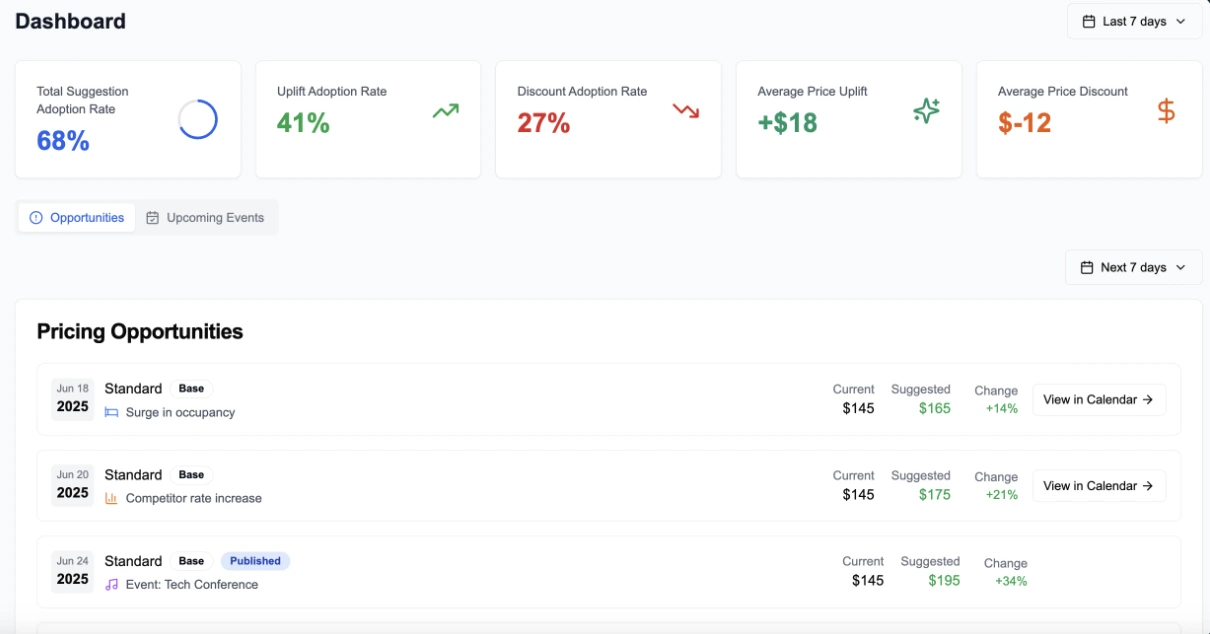
Hotels cannot monitor local events, competitor activity, and demand spikes as large chains do. ampliphi RMS provides full visibility by gathering live market intelligence and translating it into actionable insights. The system helps hotels:
- Track competitor pricing movements in real time
- Monitor demand fluctuations tied to events or holidays
- Observe changes in booking pace across key channels.
This intelligence lets hotels act quickly, avoid underpricing, plan promotions effectively, and optimize revenue. Properties gain agility previously limited to large chains, improving long-term profitability.
5. Integration
ampliphi RMS integrates with hotel management software, channel managers, and other hospitality tools to provide seamless workflow. With this platform, you can:
- Connect systems and centralize business intelligence for easier decision-making
- Support forecasting demand and evaluating all revenue streams from one dashboard
- Simplify rate adjustments, reporting, and pricing strategy management for revenue optimization
Integration allows hotels to compete effectively while maximizing profitability and operational efficiency across all channels. This cohesive approach empowers revenue teams to act decisively without manual errors.
💡Case in Point:As a 108-room family-owned property in Ocean City, Maryland, Flamingo Motel faced a daily challenge. The coastal market required constant rate updates, but the small team manually updated rates across multiple channels two to three times a day. The process exhausted them, slowed operations, and still missed opportunities for higher revenue. Susie, the General Manager, described the struggle: “Before using ampliphi, I’m confident that we were losing a lot of revenue with pricing opportunities.” The team wanted to focus on guests but felt trapped behind spreadsheets. Everything changed when they connected ampliphi to their roommaster PMS. The AI system monitored market trends, demand shifts, and local events automatically. It suggested real-time rate adjustments, updated channels instantly, and eliminated manual work. The results spoke for themselves. During Summer 2025, Flamingo Motel increased RevPAR by 35%. Rate parity remained consistent, demand surges triggered automatic updates, and the team finally focused on delivering exceptional guest experiences. |
How to Choose the Best Hotel Revenue Management Software
Selecting the best revenue management software can significantly improve occupancy, pricing decisions, and hotel profitability. Focus on features that impact daily operations and long-term revenue performance:
- Customer support and training: Look for software that provides 24/7 support, onboarding, and training resources. Staff adoption improves faster when teams receive hands-on guidance.
- Mobile accessibility and cloud support: Cloud-based systems with mobile access allow revenue teams to monitor performance, adjust rates, and review insights from anywhere.
- Automation features: The software must automatically update rates across all sales channels based on occupancy, pacing, and competitor rates. Automation saves hours of manual work for hotel staff every week.
- Customization and flexibility: The software must let hotels tailor rate rules, promotions, and reporting formats to suit unique operational needs. Flexibility supports independent hotels handling varying room types and guest segments.
- Reporting and insights: Look for advanced reporting beyond basic dashboards. Detailed insights on booking pace, revenue trends, and historical performance enable smarter decisions.
- Cost and scalability: The system should fit your current budget while supporting growth over time. Scalable software grows with your hotel’s revenue streams and operational needs.
Hotel Revenue Management Software Evaluation Checklist
|
How RMS Empowers Hotels to Maximize Revenue
According to a recent industry report, over 68,000 travel and hospitality businesses implemented RMS solutions in 2024 to respond to shifting demand and pricing volatility. Meanwhile, hotels using modern RMS platforms reported average revenue improvements between 15% and 22%, along with higher occupancy accuracy.
These statistics represents a growing window of opportunity. On the other hand, market surprises happen often, including last‑minute cancellations, sudden demand spikes, or unexpected local events, which can either empty your rooms or fill them fast. A system like ampliphi RMS reacts instantly, adjusting pricing automatically to suit demand changes and safeguard your bottom line.
However, your judgment stays central. You can decide how aggressively to set pricing rules and when to intervene to preserve your hotel’s brand identity and guest promise. ampliphi RMS equips you with powerful tools so you can compete with large chains while maintaining your unique charm.
Schedule a demo today and discover how ampliphi’s AI‑powered RMS can transform how you manage revenue.
FAQs
What is revenue management software for hotels?
Revenue management software is a system that helps hotels optimize pricing, occupancy, and revenue streams effectively. It analyzes historical data, market demand, and competitor pricing to guide informed pricing decisions and maximize profitability across all rooms and sales channels.
What features should a hotel RMS include?
A hotel RMS software should include predictive forecasting, real time pricing, competitor rate monitoring, and automation. It must also provide actionable data analysis and integrate with PMS and channel managers for complete revenue optimization.
What is the best revenue management software?
The best revenue management software adapts to market changes and improves operational efficiency. ampliphi RMS offers AI-driven insights, dynamic pricing, and automation to maximize occupancy and revenue for independent hotels effectively.
How does RMS improve hotel profitability?
RMS increases hotel profitability by adjusting prices based on demand, occupancy, and competitor activity. It captures missed revenue opportunities, improves forecast accuracy, and helps revenue teams make smarter pricing decisions consistently.