

TL;DR
|
Introduction
As demand shifts across multiple channels, revenue managers are constantly working to keep room rates, availability, and inventory aligned wherever a guest might book. A hotel channel manager connects your property to various online channels and booking sites, helping you reflect accurate information across platforms without breaking your workflow.
When everything updates in sync, you spend less time fixing inconsistencies and more time focusing on strategy, performance, and the kind of guest experience that keeps bookings coming back.

In this guide, you will learn how a hotel channel manager works, why it matters for revenue managers, and how pairing it with the right revenue management system can simplify your entire distribution strategy while driving measurable revenue growth.
What Is a Hotel Channel Manager?
A hotel channel manager is distribution software that syncs rates, availability, and inventory across third-party channels such as online travel agencies (OTAs). It connects your property to multiple sales channels, including OTAs, your hotel website, and other booking platforms.
Here is how it works in practice:
- You list your rooms across online booking channels.
- The channel manager pushes updates to every platform instantly.
- Guests see accurate room types, pricing, and availability in real time.
This removes the need to update each platform manually. The channel manager handles everything from a single central dashboard, giving your team better control and saving valuable time.
Channel Manager vs. Revenue Management System: What’s the Difference?
A channel manager and a revenue management system (RMS) serve different but complementary roles. A channel manager handles where your rooms are listed. An RMS handles what price they are listed at.
The channel manager distributes your inventory across OTAs, your website, and other booking platforms. The RMS analyzes demand, competitor rates, and market conditions to determine the optimal price for each room type at any given moment.
When both work together, your distribution stays accurate and your pricing stays competitive. That combination is how hotels capture the most revenue from every booking opportunity.
Why Revenue Managers Care About Channel Managers

Revenue managers do not just manage pricing. They shape how a hotel sells across every touchpoint, which makes distribution management just as important as rate strategy. As hotels expand across more platforms, the workload grows quickly, and manual updates start to slow everything down.
Without a channel manager, teams spend hours updating room availability across multiple sales channels. That time adds up fast, and it increases the risk of pricing errors and missed bookings. Industry research highlights the scale of this challenge:
Nearly all hoteliers feel the impact:
- Around 98% report losing an average of 6% of annual revenue due to rate leakage.
- Properties spend approximately $40,100 each year managing their B2B distribution networks.
- 99% of hotel professionals recognize that a centralized platform improves revenue protection.
A channel manager brings everything into one place. Revenue managers gain better control over their channel mix, real-time rate updates, and performance tracking across platforms. This visibility helps identify which channels drive the most bookings and where to focus effort next.
At the same time, pricing decisions rely on accurate and timely data. Dynamic rate management allows teams to adjust prices instantly based on demand and market changes, keeping the property competitive without delays.
How Channel Managers Work Step by Step
A hotel channel manager connects your booking channels into one system and keeps them synchronized. When the process runs smoothly, your listings stay accurate, your team stays focused, and your revenue strategy stays organized.
Step 1: Connect All Your Channels
The process begins with bringing your channels into one connected system. Your hotel website, OTAs, and other online booking sites feed into a single platform. Instead of updating each one separately, you control everything from one place. This creates consistency in how your rooms appear across channels and gives you visibility into how each channel contributes to your bookings.
Step 2: Sync with Your PMS
The channel manager connects directly with your property management system (PMS). Every reservation, cancellation, or modification flows between systems in real time. This keeps your operations aligned without constant manual input.
An AI-powered revenue management system like ampliphi complements this step. ampliphi integrates quickly with your PMS and starts pulling live data immediately. You can set pricing rules, define rate boundaries, and let the system optimize prices based on real booking activity — while the channel manager handles the distribution side.
Step 3: Update Inventory in Real Time
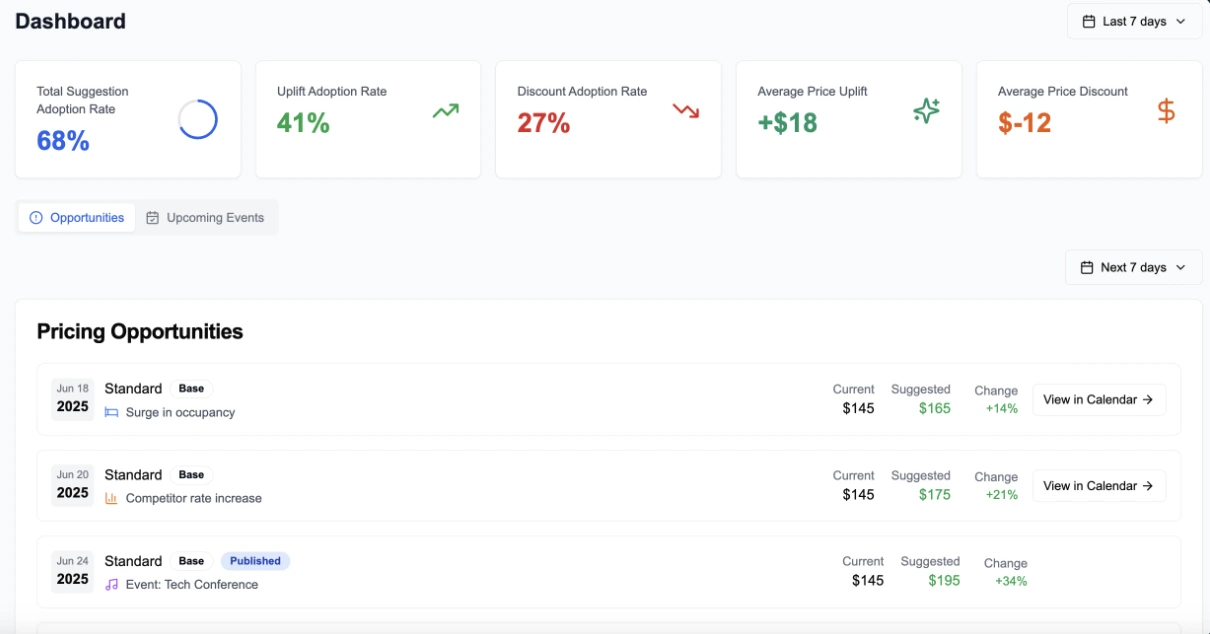
As bookings come in, room availability changes instantly across all platforms. The channel manager updates availability the moment a room is booked, keeping every channel aligned with your actual inventory.
Step 4: Push Rates and Availability
Your room rates need to reflect the market, not stay static while demand changes. The channel manager pushes pricing updates across all connected channels simultaneously, keeping your rates consistent everywhere.

This is where an RMS makes the biggest difference. ampliphi’s dynamic pricing engine determines the optimal rate based on demand fluctuations, seasonality, and competitor pricing in real time. The channel manager then distributes those optimized rates across every platform instantly.
For example, when demand rises during a holiday period, ampliphi increases rates gradually as rooms fill, helping you capture more revenue. The channel manager ensures those rate changes appear on your OTAs and direct booking channels at the same time, eliminating delays and rate disparity.
Step 5: Prevent Overbookings
When availability changes instantly across systems, the chances of double bookings drop significantly. The channel manager removes booked rooms from inventory across all channels in real time, keeping your listings reliable even during high-demand periods. This consistency helps your team avoid last-minute conflicts and keeps the guest experience smooth from booking to check-in.
Step 6: Centralize Operations
As everything connects and updates in real time, your operations come together in one place. A channel manager gives you a central view of your distribution and performance.
ampliphi builds on this with built-in market and competitor insights that turn raw data into clear direction. You can track competitor pricing, spot demand spikes tied to events, and monitor booking pace across channels. Its central rate calendar lets you view pricing decisions across dates, room types, and channels, while KPI tracking helps you follow RevPAR, ADR, and overall revenue.
This level of visibility gives you stronger control over your channel management strategy while keeping your day-to-day workflow simple and focused.
What Channel Managers Actually Sync
Channel managers keep your property fully synced across all your OTAs, including Airbnb, Booking.com, and Expedia. They update your data instantly so your listings always match reality. Here is what they handle:
- Real-time availability: When a guest books a room on one site, the channel manager instantly updates availability on all other connected platforms.
- Pricing and rates: Changes to rates, including special offers, are updated across all channels to maintain parity.
- Booking information: As soon as a booking happens, all guest data flows directly into your PMS automatically.
- Restrictions: Minimum stay requirements, closed-to-arrival (CTA), and closed-to-departure (CTD) rules are applied across all platforms instantly.
The Business Benefits of Channel Managers
A channel manager centralizes rates and availability, keeping distribution accurate in real time. When paired with the right RMS, the benefits multiply across your day-to-day operations.
1. Drive Higher Revenue
When your room rates, availability, and inventory stay aligned across all channels, you can respond to demand as it builds. ampliphi’s dynamic pricing adjusts rates in real time based on market shifts and competitor activity. Hotels using ampliphi have seen RevPAR increase by up to 35% while keeping pricing consistent across every platform.
2. Save Time on Daily Operations
Manual OTA management takes up a significant part of a hotel team’s time. According to Hotel Tech Report, 89% of hotel operators save 2 to 10 or more hours per week with their PMS, and 17% save over 500 hours annually.
A channel manager removes the need to update each platform separately. ampliphi’s automation workflows complement this by tracking bookings, monitoring demand, and applying rate updates continuously. Together, your team gets those hours back to focus on guests and strategy.
3. Stay in Control Without Complexity
When everything runs through connected systems, you get a clearer view of performance across channels. ampliphi lets you set pricing rules, track competitor trends, and switch between autopilot and manual control anytime. You stay informed and in charge without adding extra layers to your workflow.
What Revenue Managers Should Look for in Hotel Channel Manager Software
A last-minute booking on Airbnb while your rates on Booking.com are still outdated can cost you revenue and create unnecessary stress. You need channel manager software that keeps everything moving smoothly, updates instantly, and gives you confidence in your data. Here are the key features to prioritize:
- PMS, booking engine, and RMS integration: The right software connects directly to your PMS, RMS, and booking engine. ampliphi integrates with popular systems like roomMaster, Seekda, and CMS Hospitality, making the connection between your RMS and channel manager seamless.
- Comprehensive analytics and reporting: Your software should give you clear insights into occupancy trends, channel performance, and revenue patterns so you can make smarter, timely pricing decisions.
- Automated rate management: Choose a system that adapts rates dynamically for busy periods and slow days, helping you capture more bookings without manual updates.
- Reliable 24/7 support: 88% of customers say good service makes them more likely to return. Guests expect quick answers, and responsive service keeps operations running without interruptions. Make sure your software provider offers fast, accessible assistance.
- User-friendly interface and mobile access: The right platform lets you adjust availability, rates, and restrictions easily from your computer or phone, giving you control wherever you are.
- Real-time updates: A channel manager should keep availability, pricing, and reservations synchronized across all booking platforms in real time.
Take Control of Your Hotel Distribution
For hotels distributing across multiple platforms, a channel manager has become essential to staying competitive. It keeps your inventory accurate, your rates consistent, and your operations efficient across every booking channel.
But distribution is only half the equation. The other half is pricing intelligence. ampliphi brings both together by integrating with your PMS and channel manager to optimize rates based on live market data. Its dynamic pricing captures more value from each booking, its automation saves your team hours every week, and its built-in insights keep you informed and in control at all times.
Request your free demo and see how ampliphi can strengthen your hotel’s revenue strategy.
FAQs
What is a hotel channel manager?
A hotel channel manager is a tool that connects your hotel to multiple booking channels and updates rates and availability in real time. It manages room inventory, prevents double bookings, and improves distribution across online booking sites and direct platforms.
How does a hotel channel manager work?
Channel management software connects your property management system with various online distribution channels. It updates room availability, pricing, and reservations automatically across all platforms. This reduces manual work, improves accuracy, and helps hotels manage multiple channels from one centralized system.
What is the difference between a channel manager and an RMS?
A channel manager handles distribution — it syncs your inventory and rates across booking platforms. A revenue management system (RMS) like ampliphi handles pricing intelligence — it analyzes demand, competitor rates, and market conditions to determine optimal room prices. The two work best together.