

TL;DR
|
The best revenue management system depends on how fast your hotel needs to react to the market, but for properties that value real-time pricing, competitive visibility, and automated decision-making, ampliphi RMS clearly stands out.
While RoomPriceGenie is a strong choice for hotels looking for simple, rule-based automation and easy-to-understand pricing recommendations, ampliphi RMS is purpose-built for continuous, live market optimization. It focuses on real-time demand signals, competitor movements, and AI-driven alerts to help hotels capture revenue opportunities as they arise.
If you’re choosing a revenue management system in 2026, the ampliphi RMS vs RoomPriceGenie comparison will help you avoid slow automation, missed demand spikes, and pricing strategies that react too late.
How We Compared ampliphi vs RoomPriceGenie
To compare ampliphi RMS and RoomPriceGenie objectively, we focused on how each platform performs in real hotel revenue environments, not just feature lists. The goal was to understand how quickly teams can react, how much manual work gets eliminated, and how clearly each system supports pricing decisions.
Our comparison focuses on the factors that matter most in day-to-day revenue management:
- Pricing responsiveness and automation depth: We evaluated whether rates update in real time or rely on scheduled or rule-based adjustments.
- Market and competitor intelligence: We examined how each platform tracks demand signals, local events, and competitor pricing, and how that data feeds into decisions.
- Controls and explainability: We assessed pricing guardrails, overrides, and how clearly teams can understand why prices change.
- Integrations and workflow: We looked at how each system connects with PMS and channel managers to reduce manual effort.
- Time to value: We compared setup speed, onboarding effort, and how quickly hotels can see a measurable revenue impact.
This approach keeps the comparison practical, balanced, and grounded in real operational outcomes rather than marketing claims.
Overview of ampliphi RMS
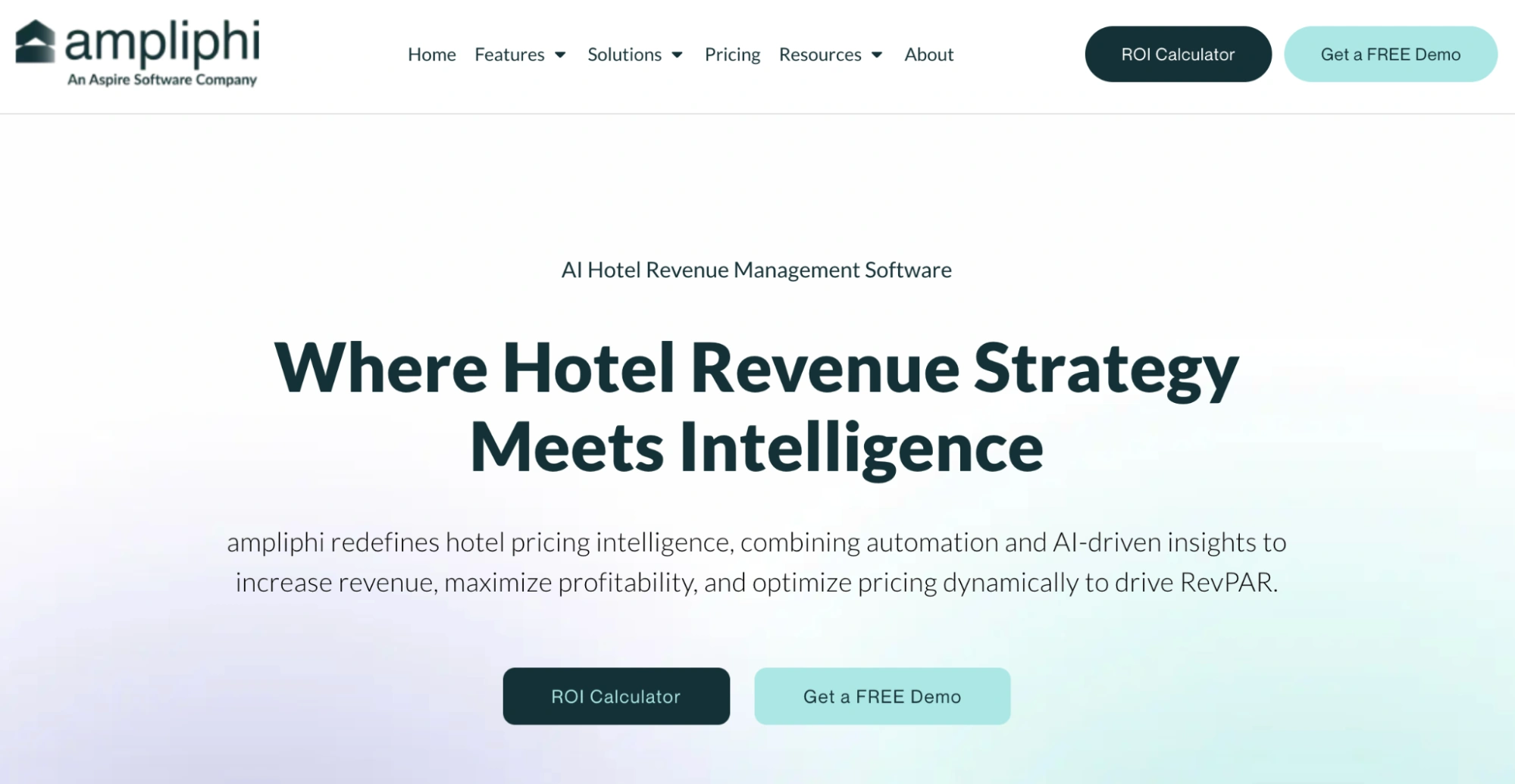
ampliphi RMS is a hotel revenue management system built for properties that need to react to market changes as they happen. It uses AI and automation to adjust pricing continuously based on live demand signals, booking pace, local events, and competitor activity.
The platform tracks real-time demand and market movements while integrating directly with your PMS and channel manager, including systems like roommaster PMS. This ensures pricing updates flow automatically across distribution channels without manual effort. Its Auto Pilot feature adjusts rates automatically using live data while respecting the pricing rules and boundaries you set. As a result, hotels stay in control of strategy while eliminating repetitive daily tasks.
Using machine learning, the system identifies demand shifts early, helping revenue teams price confidently for peak periods and avoid underpricing during slower seasons. Built-in market intelligence tools surface competitor rate changes and booking trends so teams can act quickly and keep pricing aligned with market conditions.
Overview of RoomPriceGenie
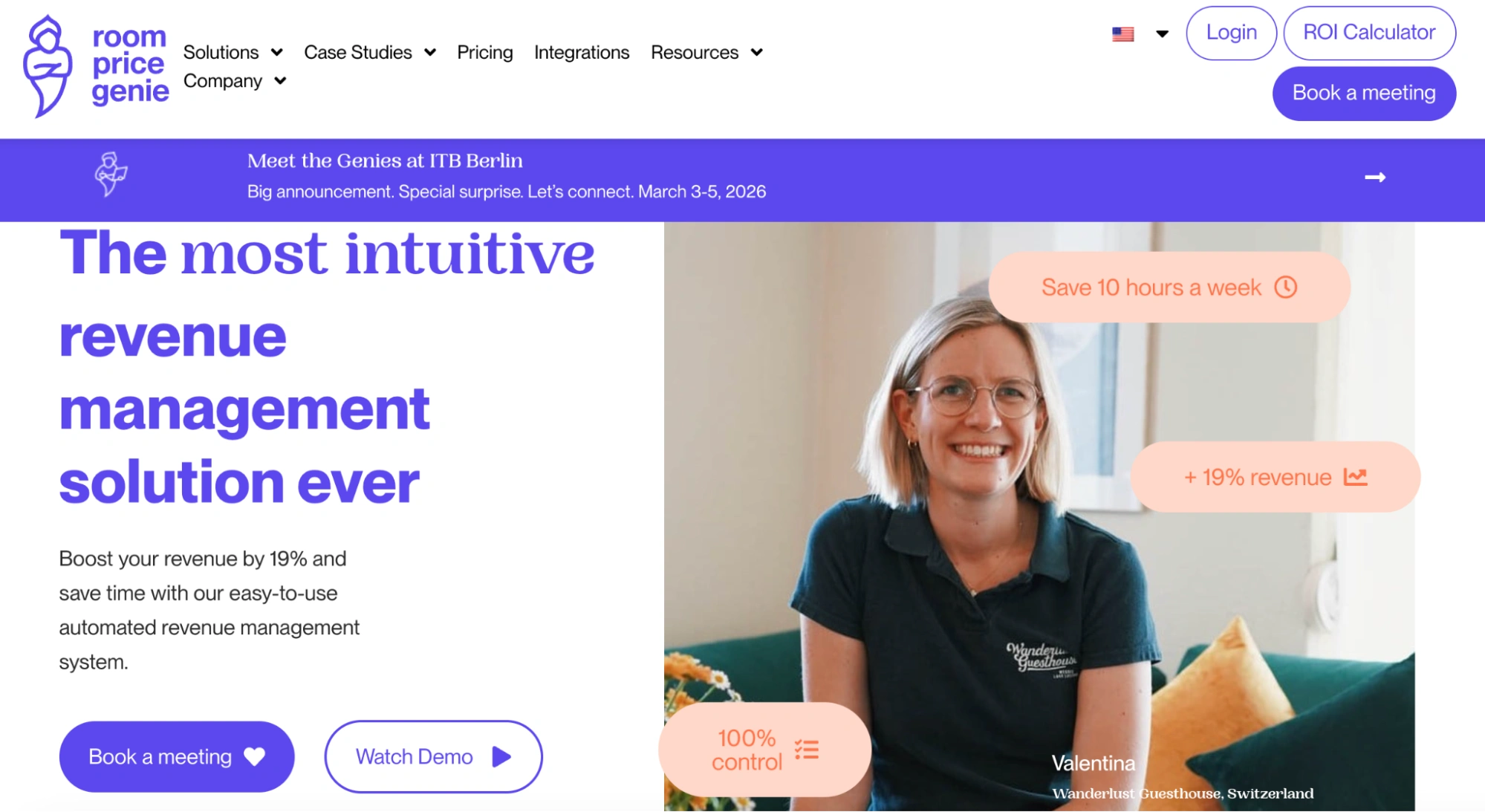
RoomPriceGenie removes the hassle from pricing by delivering clear, data-backed recommendations that you control. The system automatically analyzes competitor rates and booking trends to quickly set optimal prices. You define price limits, room types, and seasonal patterns, while the software tracks market changes and demand shifts to keep rates competitive.
The platform updates pricing up to 12 times per day and delivers forecasts up to 18 months ahead to support confident planning. It integrates with your PMS or channel manager to automate rate updates across channels. Most clients choose autopilot, trusting RoomPriceGenie to keep pricing on point without manual work.
Features of ampliphi RMS vs RoomPriceGenie: Side-by-Side Comparison
The table below compares ampliphi RMS vs RoomPriceGenie across core features, highlighting how each platform is positioned for different teams.
| Feature | ampliphi RMS | RoomPriceGenie | Winner |
| Pricing Approach | Tiered pricing based on property size and revenue goals | Packages by room count and tier | ampliphi RMS |
| Pricing Engine | Real-time dynamic pricing responsive to demand, seasonality, events, and competitor moves | Continuous rate updates using PMS data and market signals | ampliphi RMS |
| Automation & Workflow | 24/7 monitoring of bookings, occupancy, and competitor rates | Automatic updates using PMS and external data | ampliphi RMS |
| Controls: Guardrails, Overrides, Strategy Rules | Event/calendar-driven tracking, competitor alerts, and combines human oversight with proactive signals | Rate calendar, guardrails, manual overrides, occupancy strategy, lead-time adjustments, MinLOS, and CTA/CTD controls | ampliphi RMS |
| Integrations | Connects to key PMS platforms (RoomMaster, CMS Hospitality) and channel managers. Custom integrations supported | Integrates with 80+ PMS and channel managers, including Cloudbeds, Mews, and Opera. Open API for additional systems | RoomPriceGenie |
| Reporting | Tracks competitor pricing, booking pace, and demand spikes | Real-time, intuitive dashboard. Monitors Revenue, ADR, RevPAR, Occupancy, booking pace, and pickup trends | RoomPriceGenie |
| Implementation | Quick PMS connection and live data feed. Define goals, and AI starts optimizing rates immediately | Connect PMS/channel manager, import historical data, set up rate calendar and dashboards | ampliphi RMS |
Features of ampliphi RMS vs RoomPriceGenie: A Detailed Comparison
When you evaluate ampliphi RMS vs RoomPriceGenie, you need to look beyond pricing. These features determine how effectively each platform supports your workflows, scales with your business, and delivers consistent results.
1. Pricing approach
Hotels do not need another flat SaaS price that ignores room count, revenue mix, and competitive pressure. They need pricing that scales with how aggressively they want to win their market.
Here’s how ampliphi RMS and RoomPriceGenie compare in terms of pricing:
A. Pricing features in ampliphi RMS
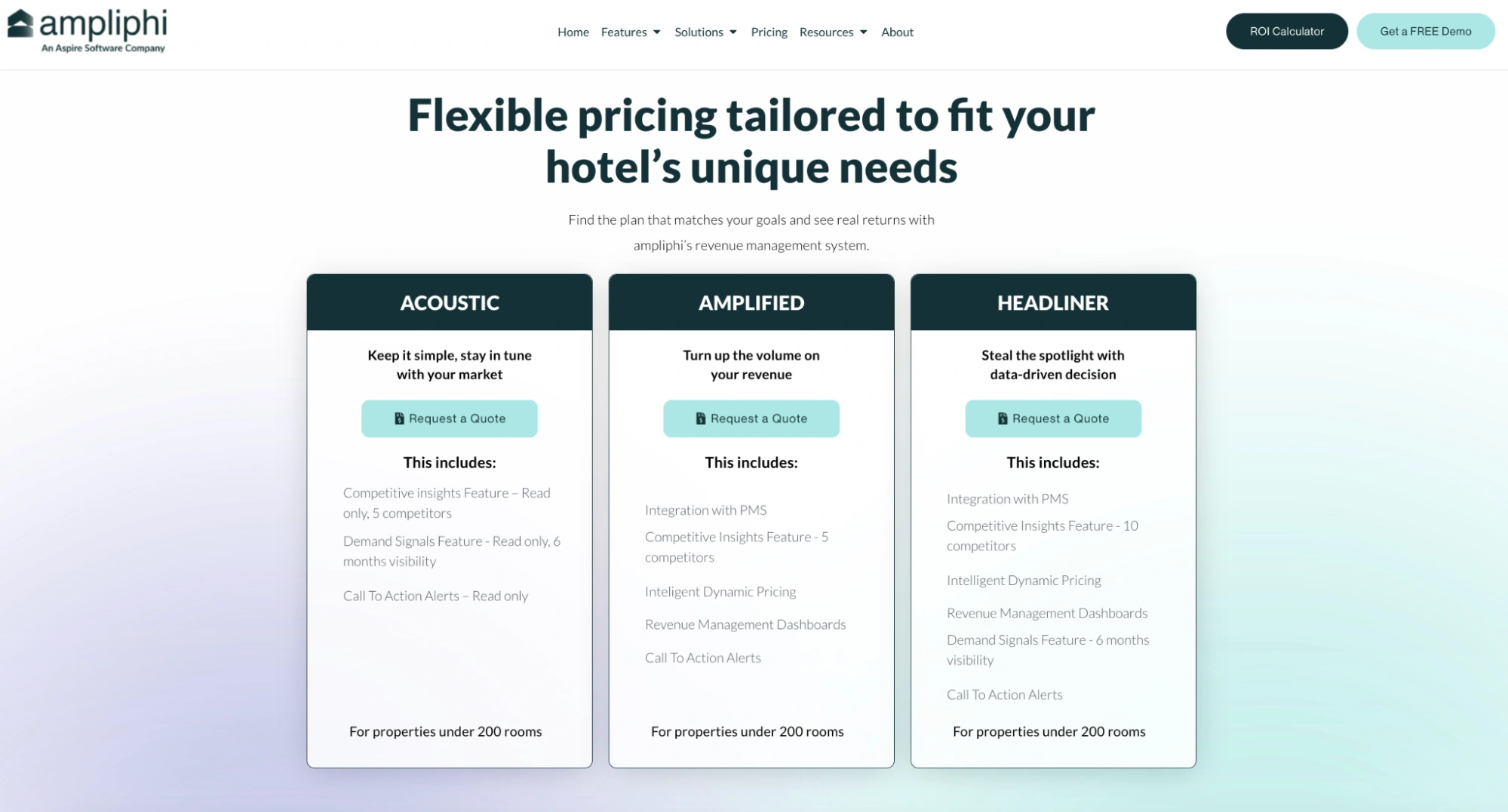
ampliphi RMS uses tiered pricing that aligns directly with property size and revenue ambition. Each tier bundles competitive intelligence, forward-looking demand data, pricing automation, and alerts that push teams to act instead of react.
For example:
- Acoustic: Designed for properties under 200 rooms. This plan delivers competitive insights from five competitors, six months of demand visibility, and call-to-action alerts that flag pricing opportunities early.
- Amplified: This tier adds PMS integration, intelligent dynamic pricing, and revenue management dashboards that centralize decision-making and reduce manual effort.
- Headliner: This plan unlocks the full platform. Hotels gain insights from ten competitors, advanced dynamic pricing, dashboards, demand signals, and real-time alerts that support aggressive, market-leading pricing strategies.
B. Pricing features in RoomPriceGenie
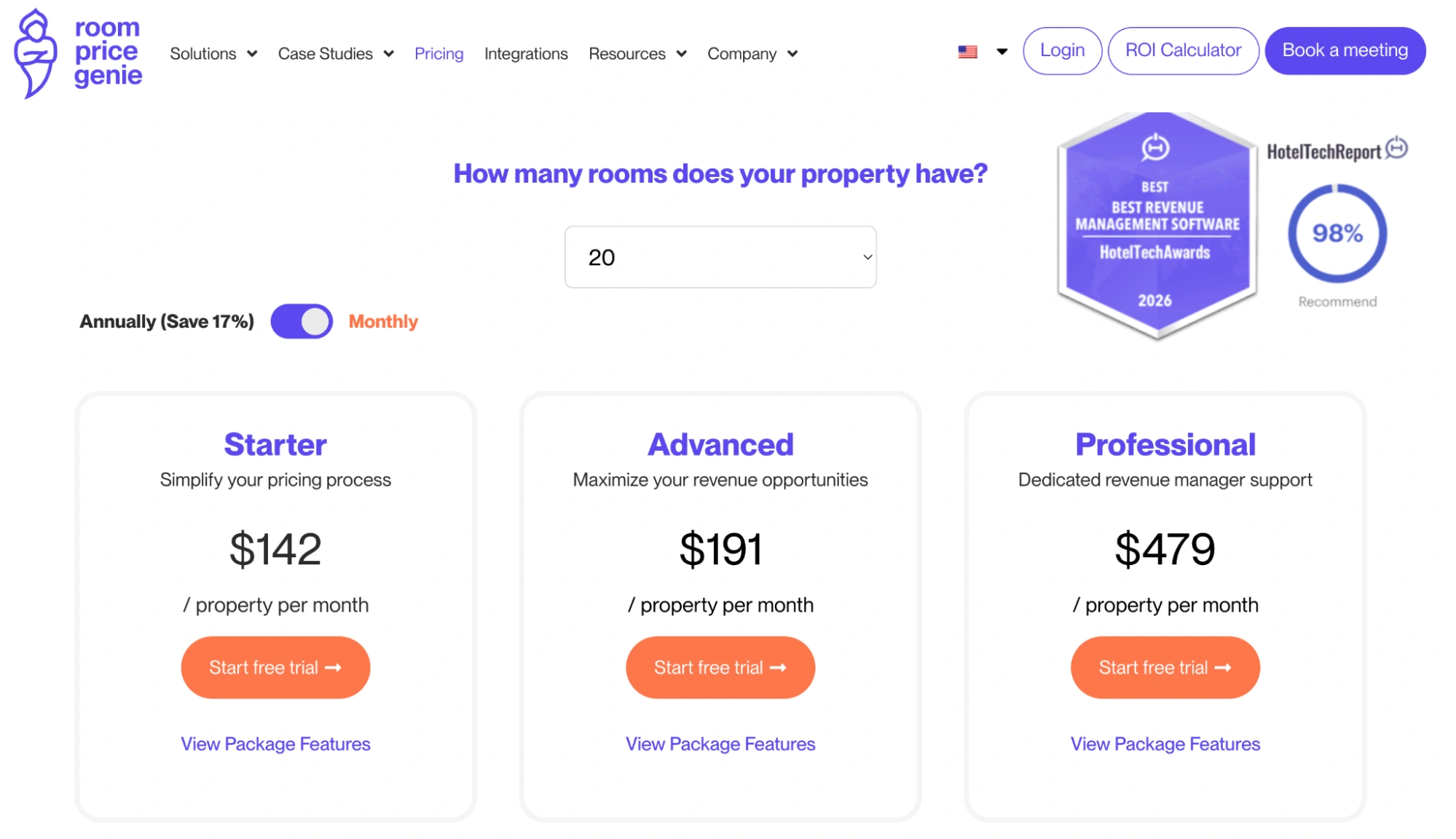
RoomPriceGenie prices primarily by room count and packages features into predefined bundles. For a 20-room property, pricing breaks down as follows.
- Starter ($142/month per property): Simplifies pricing with basic automation and limited controls
- Advanced ($191/month per property): Increases automation frequency and adds stronger revenue tools to drive incremental growth
- Professional ($479/month per property): Adds dedicated revenue manager support and advanced reporting for hands-on guidance
RoomPriceGenie emphasizes ROI with a calculator that estimates the potential revenue lift from automated pricing. The platform positions itself around ease of onboarding, no hidden fees, and broad adoption among independent hotels.
Its feature access increases by tier, including pricing update frequency, dashboard depth, forecasting, segmentation, and revenue strategy reviews. Lower tiers limit controls, analytics, and adjustment flexibility, while higher tiers unlock more frequent automation and human support.
C. Which approach delivers the most adaptable pricing strategy?
Winner: ampliphi RMS
ampliphi RMS wins on adaptability because it prices around how hotels compete, not just how many rooms they sell. The platform scales by strategic capability, competitive depth, and decision speed.
On the other hand, RoomPriceGenie works well for smaller properties that want guided automation with minimal setup. However, its rigid tier structure and feature gating limit how precisely hotels can tailor pricing behavior as market conditions change.
ampliphi RMS treats pricing as a strategic weapon. RoomPriceGenie treats it as a packaged service. That difference decides the outcome.
2. Pricing engine approach
Hotels need a pricing engine that reacts instantly to every shift in demand, seasonality, events, and competitor rates. Here’s how both tools function in terms of real-time pricing optimization:
A. Pricing approach in ampliphi RMS

ampliphi dynamically adjusts room rates in real time based on demand, seasonality, events, and competitor pricing.
For example, a seaside hotel facing a holiday weekend sees rates rise gradually as rooms fill, preserving guest trust while capturing maximum revenue. Real-time updates across all channels let hotels:
- Respond instantly to market pricing changes and maintain competitive positioning
- Update OTAs and direct booking channels simultaneously, eliminating manual delays
- Cut reliance on spreadsheets and repetitive tasks, freeing teams to focus on strategy and guest experience
By automating adjustments, ampliphi delivers independent hotels’ pricing agility without adding operational overhead. In fact, hotels using ampliphi RMS see up to a 35% increase in revenue per available room (RevPAR).
B. Pricing approach in RoomPriceGenie
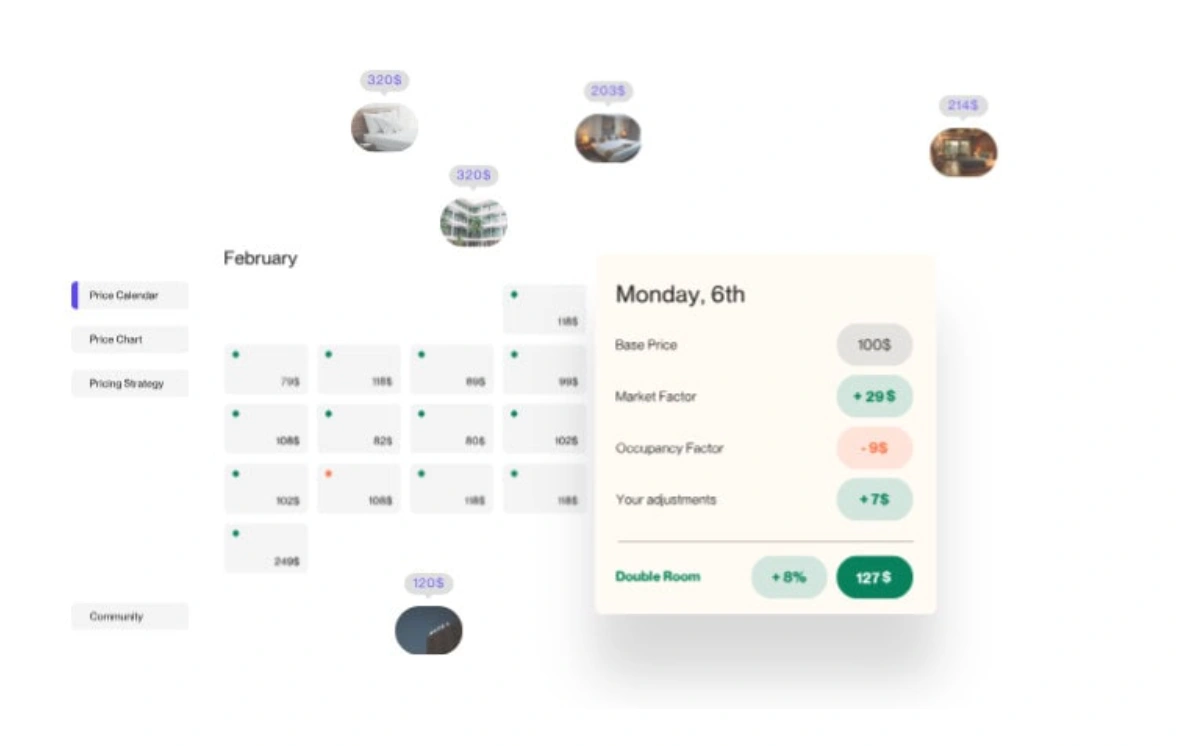
RoomPriceGenie continuously updates rates using internal PMS data and external market conditions. The engine tracks competitor rates, local Airbnb activity, and booking patterns to optimize pricing in real time. Hotels using this approach see revenue gains averaging 19%, roughly $70,000 per year for a 19-room property.
Real-time optimization also improves inventory management, maximizes occupancy, and ensures fair, market-driven pricing that drives bookings, guest satisfaction, and repeat business. RoomPriceGenie simplifies revenue management by automating price adjustments while keeping hotels competitive without constant manual intervention.
C. Which platform excels in real-time pricing?
Winner: ampliphi RMS
ampliphi wins here because it balances aggressive revenue capture with guest trust and market parity. RoomPriceGenie automates well, but ampliphi’s gradual, context-sensitive adjustments give hotels more precise control over revenue and reputation.
3. Automation & workflow
Every unsold room is lost revenue, so the tool that triggers the right price at the right moment separates reactive hotels from market leaders.
Let’s see how ampliphi RMS and RoomPriceGenie handle automation and workflow.
A. Automation & workflow in ampliphi RMS

With its AI optimization tool, ampliphi continuously monitors bookings, occupancy, competitor rates, and market trends to reduce manual work. The system automatically adjusts rates within your defined floor and ceiling limits and sends alerts for upcoming events that could spike demand. This allows staff to stop crunching spreadsheets and start focusing on upselling, guest engagement, and operational strategy.
Here’s what it does:
- Track live bookings, occupancy, and competitor rates 24/7
- Update rates automatically based on pricing rules
- Flag events and demand spikes for proactive adjustments
B. Automation & workflow in RoomPriceGenie
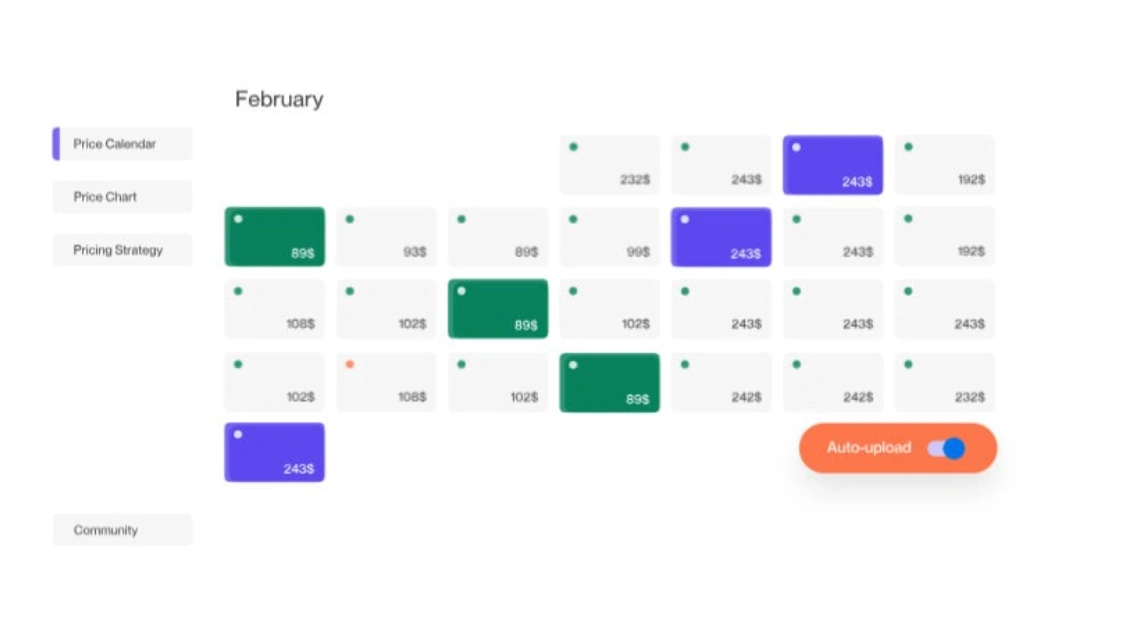
RoomPriceGenie updates rates automatically using internal PMS data and external market signals. The engine monitors competitor pricing, local Airbnb activity, and booking patterns to identify demand surges and price opportunities.
This allows hotels to stay competitive, maximize revenue, and capture bookings during high-demand periods without manual intervention.
C. Which platform excels in automation & workflow?
Winner: ampliphi RMS
ampliphi delivers deeper workflow automation by combining continuous monitoring, rule-based rate adjustments, and proactive event alerts. RoomPriceGenie automates pricing well, but it lacks the broader operational context and actionable signals that free staff to focus on strategy and guest experience.
4. Controls: Guardrails, Overrides, Strategy Rules
Dynamic pricing works best when it follows guardrails, manual overrides, and pre-set strategies that align with real revenue goals:
A. Controls in ampliphi RMS
ampliphi empowers revenue teams to act confidently while the AI suggests optimal rates. The system flags competitor moves, tracks upcoming market events, and surfaces demand trends before they hit, letting teams move proactively instead of reacting under pressure.
Some of its key features include:
- Event & calendar-driven tracking: AI identifies spikes and demand shifts using your rate calendar
- Competitor pricing alerts: Receive notifications before competitors disrupt your positioning
- Predefined strategy rules: Set floors, ceilings, restrictions, and promotions in advance to guard revenue
These controls protect pricing during high-demand periods, uncover promotional opportunities during slower windows, and give teams the confidence to manage capacity strategically without second-guessing the system.
B. Controls in RoomPriceGenie
RoomPriceGenie gives hotels a rate calendar alongside guardrails, manual overrides, and strategy rules to keep automated pricing both safe and intelligent. The rate calendar shows room rates and availability for specific dates, factoring in external trends, such as competitor pricing, local events, seasonality, and holidays, and internal PMS data.
Teams can adjust rates, inventory, and marketing strategies year-round to maximize revenue and occupancy. Here’s how:
- Rate calendar: Visualize and update room rates and availability across all room types for specific dates
- Guardrails: Define price floors and ceilings to prevent extreme rates
- Overrides: Fix rates for specific days, room types, or channels whenever needed
- Strategy rules: Set occupancy targets, lead-time pricing adjustments, minimum stays, and closed-to-arrival/departure dates
This calendar-driven approach helps hotels price the right room at the right time, 365 days a year, while combining automation with human oversight for smarter, more strategic decision-making.
C. Which platform excels in controls and strategy rules?
Winner: ampliphi RMS
Both platforms give hotels guardrails, manual overrides, and calendar-based pricing, but ampliphi pulls ahead by combining these controls with forward-looking market intelligence and proactive alerts. RoomPriceGenie’s rate calendar and strategic rules provide excellent flexibility, yet ampliphi’s predictive insights help teams act before demand or competitor shifts hit, keeping revenue and positioning fully protected.
5. Integrations: PMS, channel manager, and BI
Integrations make or break automation, and the strongest platforms turn every system in your tech stack into a synchronized revenue engine.
A. Integrations in ampliphi RMS
ampliphi connects directly to key hotel systems, including PMS platforms like roommaster PMS and CMS Hospitality. Rate recommendations sync automatically into reservations and availability, eliminating manual transfers.
The platform also integrates with channel managers to update OTAs and direct booking channels in real time. For hotels using systems not yet listed, ampliphi works directly with the property to confirm or build custom integration options.
B. Integrations in RoomPriceGenie
RoomPriceGenie connects with over 80 PMS and channel management systems, including popular platforms like Cloudbeds, Mews, and Opera. Automated updates flow through the rate calendar, adjusting rates, availability, and room types based on external market conditions and internal PMS data.
If a system is missing, hotels can join the Open API waitlist to have it added.
C. Which platform excels in integrations?
Winner: RoomPriceGenie
RoomPriceGenie wins on sheer breadth, connecting to more than 80 PMS and channel managers out of the box and offering an API for additional systems. While ampliphi integrates with key platforms reliably and can customize connections, RoomPriceGenie gives hotels faster, more extensive plug-and-play coverage across existing systems.
6. Reporting: How quickly owners understand decisions
Without real-time visibility into KPIs, budget vs. forecast, and competitor behavior, even the best pricing strategy can fail. Hence, reporting must translate data into instant decisions:
A. Reporting in ampliphi RMS

ampliphi gives independent hotels analytical power without a dedicated data team. The system tracks competitor pricing, booking pace, and demand spikes tied to events or holidays, turning raw market data into actionable insights. Teams can react instantly to changes, adjust rates dynamically, and avoid underpricing during high-demand periods.
For example, a boutique hotel near a conference center can anticipate an upcoming surge in reservations and gradually raise rates, maximizing revenue while maintaining guest trust.
B. Reporting in RoomPriceGenie
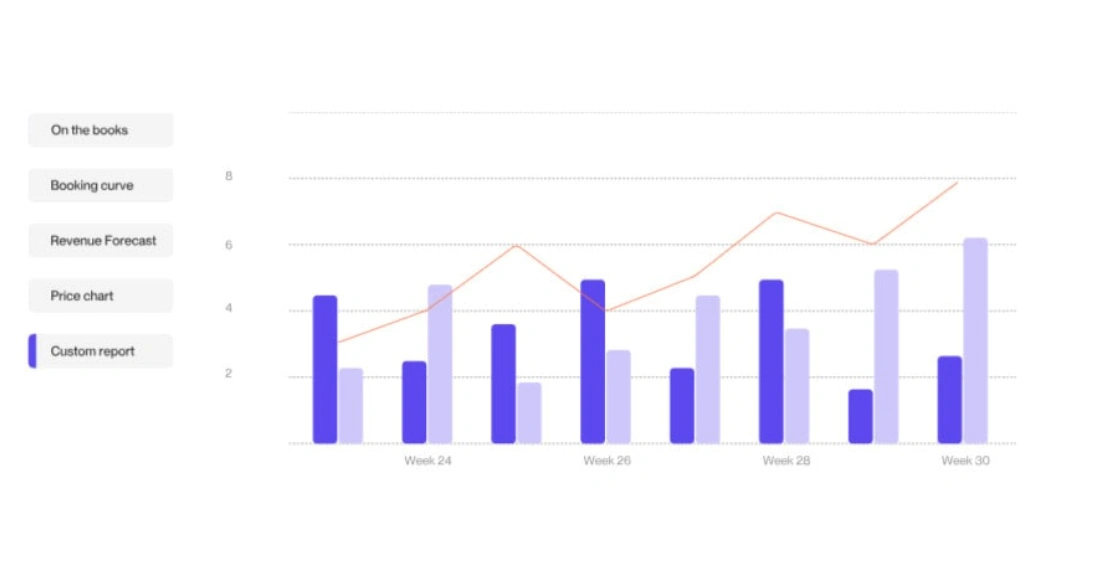
RoomPriceGenie turns complex revenue data into an intuitive, real-time analytics dashboard. Owners and revenue managers can track all essential KPIs, including Revenue, Occupancy, ADR, and RevPAR, and compare performance to prior periods, and segment data by room type, channel, or customer segment.
The platform highlights booking pace, pickup trends, and competitor moves, making it easy to act immediately.
C. Which platform helps owners understand decisions faster?
Winner: RoomPriceGenie
RoomPriceGenie beats ampliphi in speed and clarity, delivering an intuitive, real-time dashboard that highlights KPIs, trends, and competitor data in a single view. ampliphi provides robust market intelligence, but RoomPriceGenie turns complex analytics into instantly actionable insights, letting owners react faster and more confidently.
7. Implementation
The faster a system pulls in live PMS and channel data, syncs pricing, and starts optimizing, the sooner teams can generate revenue:
A. Implementation in ampliphi RMS
ampliphi RMS gets hotels operational fast. Teams link their PMS in minutes and immediately begin feeding live booking and rate data into the platform. From there, you define pricing goals and guardrails, and the AI starts optimizing rates in real time without manual effort.
The short setup means revenue teams begin capturing demand opportunities almost immediately.
B. Implementation in RoomPriceGenie
RoomPriceGenie also focuses on fast onboarding. Properties connect their PMS and channel manager, then import historical data to activate automated pricing.
Once linked, the system’s rate calendar and analytics dashboard begin translating live data into pricing recommendations. Setup guides and support help hotels accelerate time‑to‑value, though the depth of integration can vary by PMS.
C. Which platform delivers faster time‑to‑value?
Winner: ampliphi RMS
ampliphi’s ultra‑quick PMS connection and minimal configuration let hotels start optimizing rates in real time almost immediately, shortening time‑to‑value compared with more involved onboarding flows. RoomPriceGenie also gets hotels live quickly, but its deeper analytics setup and broader system coverage mean implementation can take slightly longer before full automation and reporting are active.
Why Hotels Pick ampliphi RMS
ampliphi RMS combines real-time AI pricing, clear insights, and operational simplicity in one platform. It lets revenue teams act fast, capture more revenue, and stay ahead of competitors without adding headcount or complexity.
Here’s why hoteliers choose ampliphi RMS:
- AI updates rates continuously using bookings, OTA trends, competitor moves, and local events
- Recommendations come with context to support confident, informed decisions
- Integrations with PMS and channel managers cut manual work and free staff for strategy
- Forward-looking signals highlight high-demand periods, promotions, and capacity needs
What does this mean in practice?Revenue managers reclaim hours each week while automatically capturing incremental revenue. Teams maintain full visibility over rates and respond instantly to market changes, driving up to 35% improvements in ADR and RevPAR. |
Why Hotels Pick RoomPriceGenie
Hotels choose RoomPriceGenie because it delivers automated pricing, revenue‑boosting insights, and real results without complexity or steep expertise requirements. Independent hoteliers trust it to replace manual pricing with intelligent automation that saves time and maximizes revenue.
Here’s what it offers:
- Independent hotels give RoomPriceGenie a 98% recommendation score and 4.9/5 customer support rating
- The system is easy to use regardless of revenue management experience, letting teams activate pricing automation or adjust manually as needed
- Autopilot pricing continuously adjusts rates up to 12 times per day based on live internal performance and market conditions
- Built‑in surge protection and competitor tracking help hotels avoid underpricing and capture demand opportunities
- Over 80 PMS and channel manager integrations make setup fast
What does this mean in practice?Hotels report significant time savings and measurable revenue gains, with average increases of around 19% in total revenue and 4% in ADR after implementation. |
Use-Case Scenarios: Where Each Platform Shines
For boutique hotels and properties with heavy seasonal changes, ampliphi’s predictive pricing and proactive demand detection give teams more precise, strategic control.
Similarly, for smaller hotels and groups with limited revenue management expertise, RoomPriceGenie’s ease of use, automation, and rate calendar make it easier to go live quickly.
| Use‑Case Scenario | ampliphi RMS Strengths | RoomPriceGenie Strengths |
| 30–80 room boutique hotel | Excellent real-time dynamic pricing, competitor tracking, and proactive alerts. Handles seasonal swings and delivers up to 35% RevPAR increases | Simple automation, easy setup, maximizes occupancy with minimal effort |
| Hotel with strong seasonal swings | Predictive seasonal forecasting, event-driven rate adjustments | Rate calendar automates frequent updates, handles demand spikes |
| 100+ rooms with an experienced revenue manager | Ideal for properties with a dedicated revenue lead because ampliphi supports deeper competitive intelligence, predictive forecasting, and robust controls | Works for larger hotels but may feel less “powerful” for teams wanting very granular rule‑based control or custom strategy modeling |
| Small group (2–5 properties) | Gives multi‑property support with centralized control and a consistent pricing strategy across locations | Lets you set group‑level rules while letting each property optimize locally in real time. One dashboard can show performance across the portfolio |
RMS Selection Checklist: What to Check Before Choosing
Before committing to a revenue management system, make sure it meets your property’s practical, day-to-day needs while maximizing revenue potential across rooms, channels, and seasons.
Use this checklist to simplify your decision-making:
- Pricing Flexibility
- Does pricing scale with room count, revenue targets, and market conditions?
- Can you set floors, ceilings, and seasonal or event-based rules?
- Real-Time Pricing Engine
- Does the engine react instantly to competitor moves and booking pace?
- Can rates adjust gradually to protect guest trust while maximizing revenue?
- Automation & Workflow
- Does the system automate rate updates across all channels?
- Does it monitor occupancy, demand, and events 24/7?
- Does it free staff to focus on strategy instead of spreadsheets?
- Controls & Strategy Rules
- Does it provide guardrails, manual overrides, and strategy rules?
- Can you set occupancy targets, min-stay restrictions, and closed dates?
- Does it trigger proactive alerts to protect revenue?
- Integrations
- Does it connect with your PMS, channel manager, and BI tools?
- Does integration cover current and future systems?
- Reporting & Analytics
- Can you track ADR, RevPAR, occupancy, and revenue in real time?
- Can you easily access and act on trends, booking pace, and competitor data?
- Implementation & Time-to-Value
- How fast can you connect your PMS and channel manager?
- How quickly does the platform start optimizing rates and delivering insights?
- Support & ROI
- Does it include straightforward onboarding?
- Does it offer revenue strategy reviews?
- Are ROI results proven for similar properties?
Which Revenue Management System is Right for You?
Now that we know what to expect from each tool, choosing the right RMS comes down to your hotel’s priorities. For example:
- If you want adaptive, market-driven pricing, proactive revenue insights, and deep automation that scales with your property, choose ampliphi RMS.
- However, for smaller hotels or teams seeking straightforward automation, easy setup, and broad PMS coverage, choose RoomPriceGenie.
More particularly, ampliphi RMS empowers revenue teams to act quickly, capture incremental revenue, and maintain full control over rates, dashboards, and market intelligence without adding headcount. Its predictive alerts and dynamic pricing engine make it ideal for boutique hotels, seasonal properties, or multi-property groups that need precise, responsive revenue management.
Book a demo today and see which system drives your revenue forward.