

TL;DR
|

In this ampliphi RMS vs Atomize comparison, we’ll break down ampliphi RMS vs Atomize, including what they do, how they differ, and which one best matches your hotel’s needs in 2026.
Hotel pricing used to be slow and reactive. Teams checked rates once a day, spreadsheets piled up, and markets shifted faster than pricing could keep up.
However, hotel revenue management today runs on real-time data and smart automation.
Modern hotel revenue management systems (RMS) track demand, analyze market trends, and adjust pricing in seconds. They help hotels increase RevPAR, react to competitor shifts, and forecast with confidence. As margins tighten in 2026, the right system no longer feels optional. It is critical.
Two platforms often come up in that conversation: ampliphi RMS and Atomize.
- ampliphi RMS automates pricing but gives hoteliers more control over strategy, integrates closely with existing PMS systems, and adds tools like event-driven insights and competitive rate visibility.
- Atomize puts real-time pricing on autopilot. It feeds market signals into an AI engine that adjusts rates continuously, and forecasts demand up to two years ahead, freeing revenue teams from manual pricing tasks and helping properties improve RevPAR and ADR.
Now, both tools might sound similar at first glance, but they aren’t. Each takes a different approach, serves different hotel types, and gives revenue teams distinct levels of control and insight. Choosing the right platform depends on your property size, team structure, and revenue goals.
How We Compared ampliphi RMS vs Atomize
To compare ampliphi RMS and Atomize objectively, we tested each platform in real hotel revenue environments rather than just reviewing feature lists. We wanted to see how quickly teams react, how much manual work each system eliminates, and how clearly each platform supports pricing decisions.
We focused our comparison on the factors that drive day-to-day revenue management:
- Speed and sophistication of rate updates: We observed whether each system updates rates instantly or depends on preset schedules and rules.
- Insights on market trends and competition: We analyzed how each platform tracks shifts in demand, local events, and competitor pricing, and how teams use that data to act quickly.
- Transparency and decision control: We assessed pricing guardrails, overrides, and how clearly teams understand the reasons behind each price change.
- Workflow efficiency and system connectivity: We tested how each platform links with PMS and channel managers to minimize manual work.
- Implementation speed and measurable impact: We measured setup time, onboarding effort, and how quickly hotels see a tangible boost in revenue.
Overview of ampliphi RMS
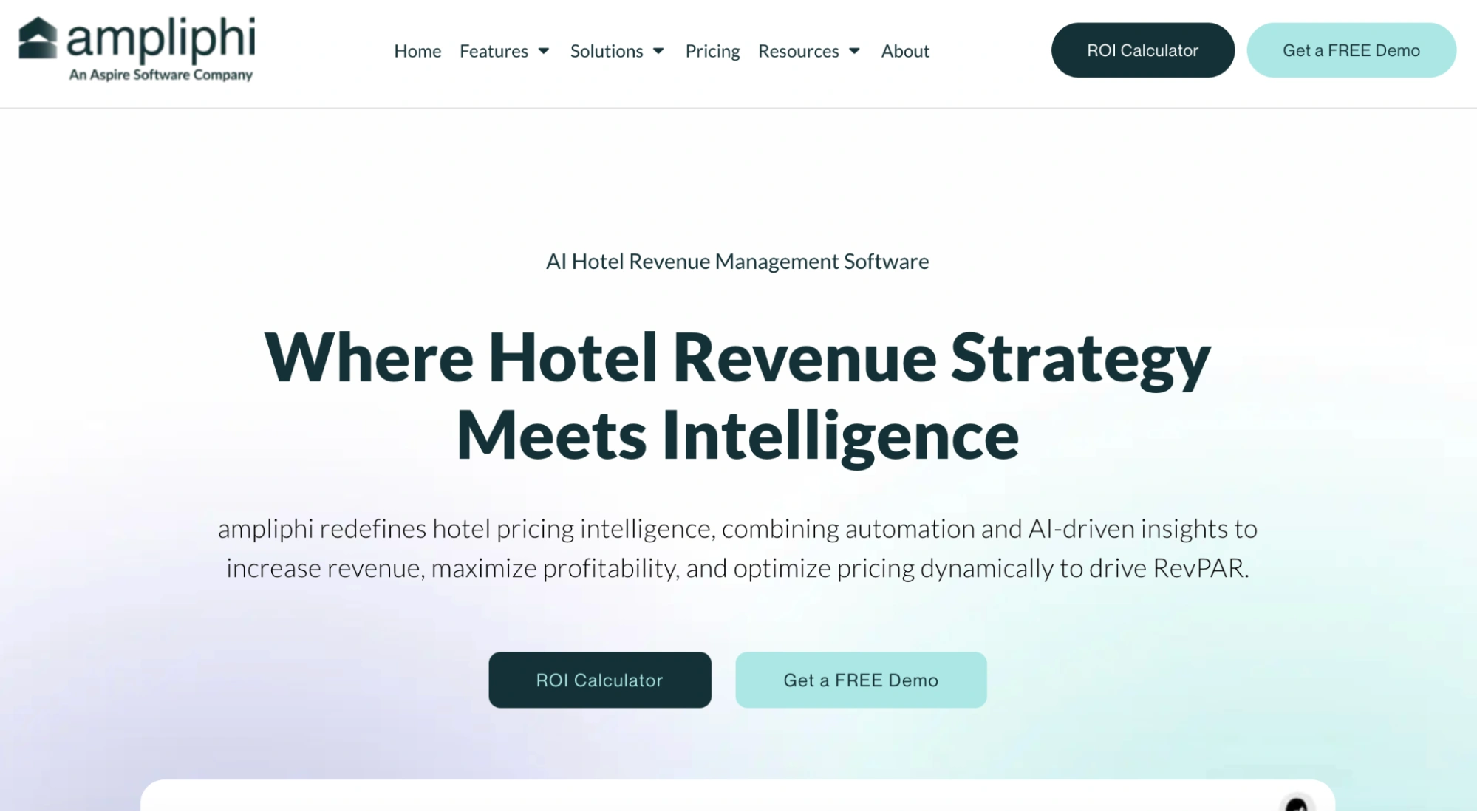
ampliphi RMS positions itself as a real-time AI revenue management software built for properties that need constant market awareness.
The platform continuously monitors:
- Live booking pace
- Occupancy shifts
- Competitor pricing
- Event-driven demand signals
- OTA market behavior
Its Auto Pilot engine adjusts rates automatically within pre-set guardrails. The system pushes updates directly through PMS and channel manager integrations, which reduces manual friction.
Hotels using AI-driven pricing engines similar to ampliphi report RevPAR increases by up to 35% when replacing static pricing models.
Overview of Atomize
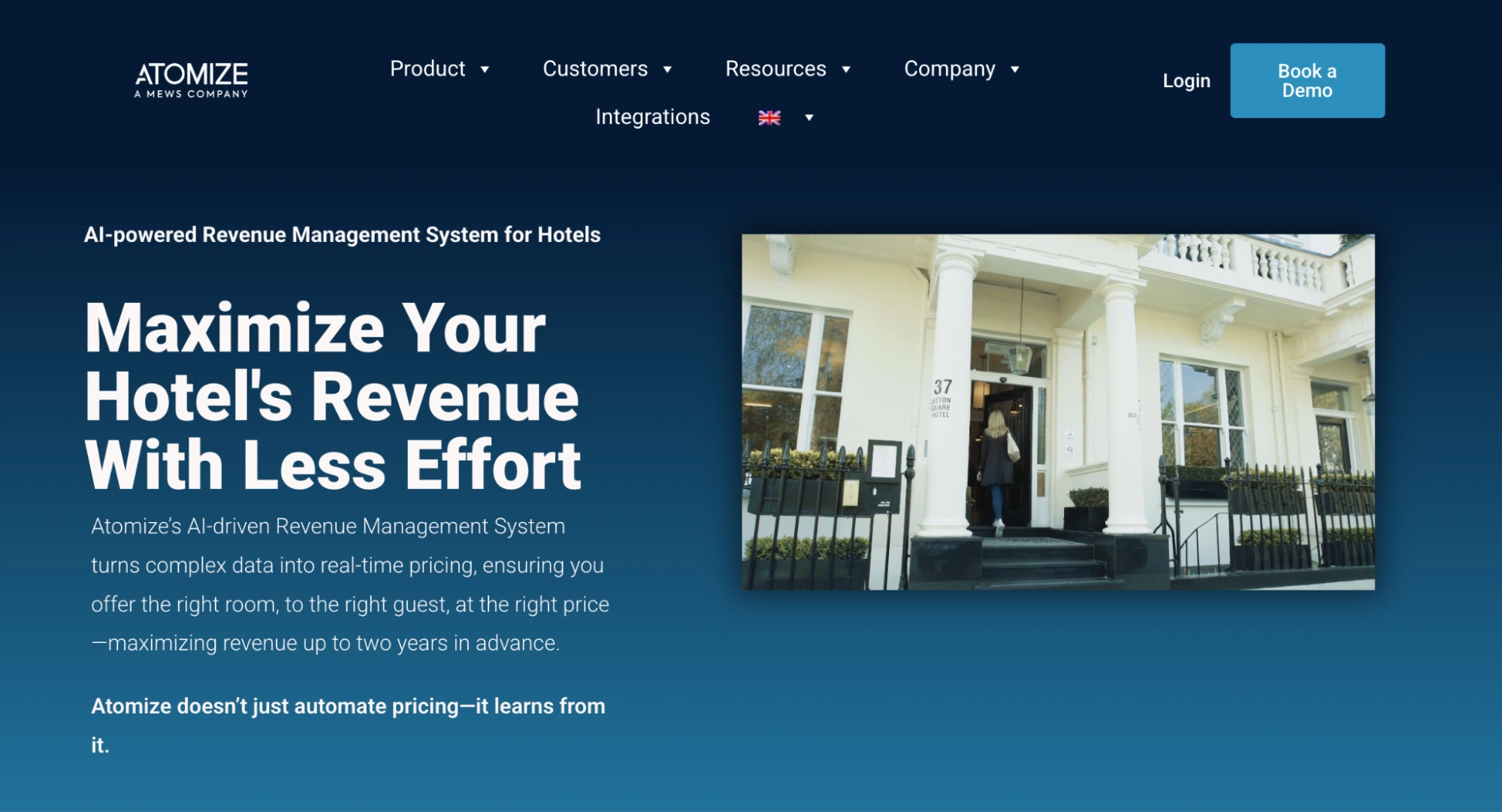
Atomize is an AI-powered RMS designed to help hotels maximize revenue with minimal effort. The platform turns complex market data into real-time pricing recommendations, ensuring hotels sell the right room to the right guest at the right price. Compared to traditional RMS tools, Atomize doesn’t just automate pricing. It learns from past performance, demand patterns, and market trends to continuously optimize rates.
Hotels using Atomize can operate more efficiently, freeing managers to focus on guest engagement and strategic decisions rather than manual pricing tasks. The system provides full transparency, explaining the rationale behind every price suggestion, so teams can act confidently and decisively. With support for multi-property management, cloud-based accessibility, and advanced forecasting, Atomize empowers hotels to scale operations without adding complexity.
Features of ampliphi RMS vs Atomize: Side-by-Side Comparison
The table below directly compares ampliphi RMS and Atomize across key features, showing how each platform serves the needs of different hotel teams.
| Feature | ampliphi RMS | Atomize | Winner |
| Pricing Approach | Tiered, strategy-driven pricing with automation, insights, and alerts. | Flexible, extended pricing up to 24 months, real-time dynamic rates. | ampliphi RMS |
| Pricing Engine | Real-time updates factoring demand, events, seasonality, and competitors. Up to 35% RevPAR lift. | Continuous real-time updates, extra 4–5% revenue. | ampliphi RMS |
| Automation & Workflow | AI adjusts rates automatically, flags events, and frees staff for strategy. | Autopilot for fully hands-off pricing up to 730 days; saves 12–20 hrs/week. | ampliphi RMS |
| Controls & Strategy Rules | Predictive alerts, event tracking, floors/ceilings, strategic rules. | Flexible floors/ceilings, seasonal adjustments, one-off overrides. | Tie |
| Integrations | PMS, channel managers, custom integrations for unique setups. | Broad PMS, CRS, channel manager connectivity. | Tie |
| Reporting & BI | Tracks competitor rates, booking trends, demand spikes; actionable insights. | Layered BI across properties, rooms, competitors; partners for advanced analytics. | Tie |
| Implementation | Quick PMS link, define rules, AI starts optimizing immediately. | Setup includes extended pricing and multi-property configuration; may take longer. | ampliphi RMS |
Features of ampliphi RMS vs Atomize: A Detailed Comparison
These features in ampliphi RMS and Atomize determine how effectively your team can forecast, optimize, and scale.
1. Pricing approach
The right RMS adapts to property size, revenue goals, and competitive pressure, helping teams seize opportunities rather than react to them.
Here’s how ampliphi RMS and Atomize approach pricing:
A. Pricing features in ampliphi RMS
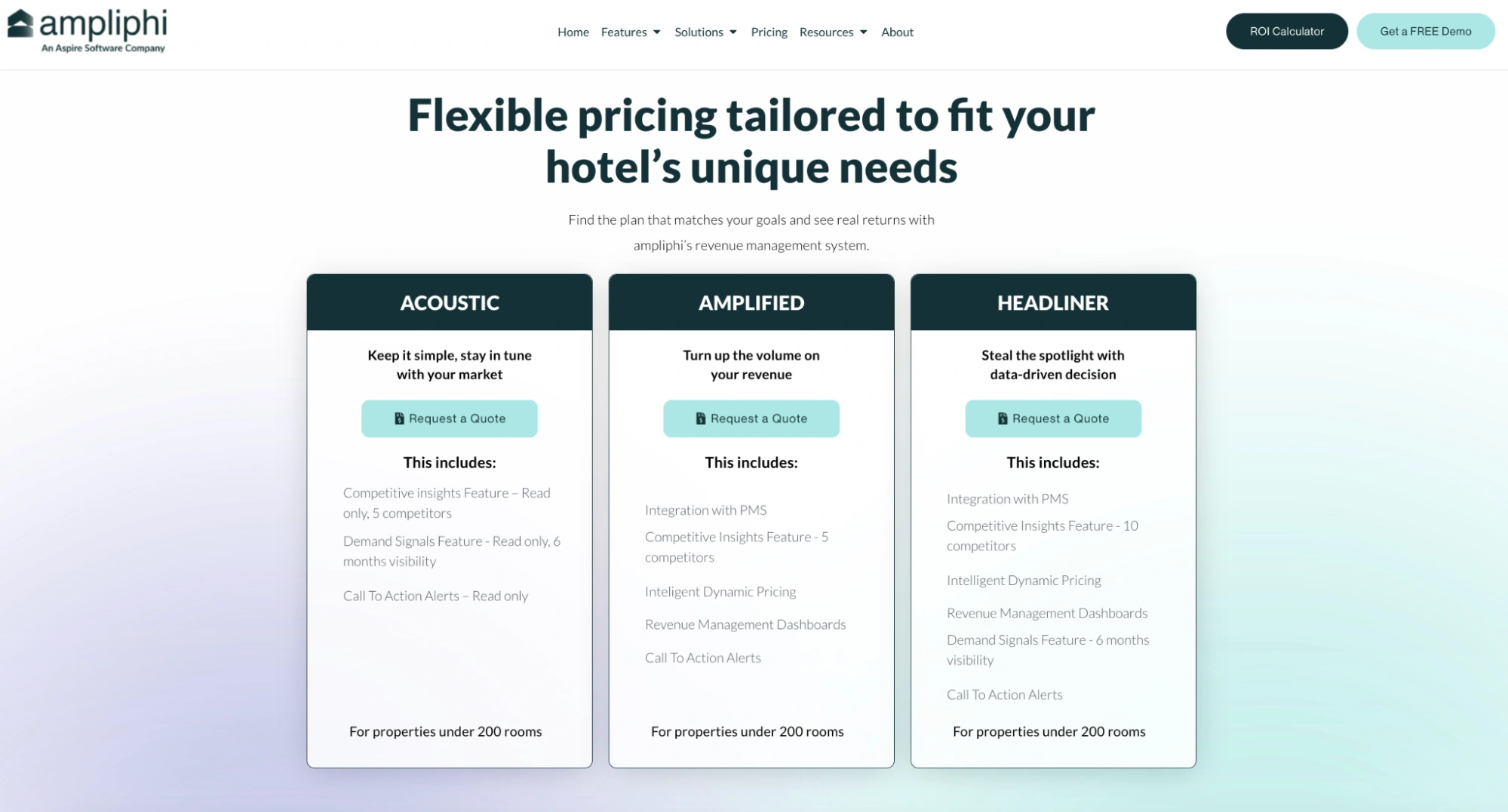
ampliphi RMS designs pricing around strategy and market positioning. Its tiered structure scales with property size and revenue ambitions, bundling automation, forward-looking insights, and actionable alerts that prompt your team to make smarter decisions quickly.
For example:
- Acoustic: For hotels under 200 rooms. Tracks 5 competitors, gives 6 months of forward demand visibility, and flags actionable pricing opportunities.
- Amplified: Adds PMS integration, smart dynamic pricing, and centralized dashboards to simplify decision-making and reduce manual work.
- Headliner: Unlocks the full platform. Tracks 10 competitors, offers advanced dynamic pricing, dashboards, demand signals, and real-time alerts for aggressive market leadership.
ampliphi RMS treats pricing as a strategic tool, helping hotels act decisively and outperform competitors at every level.
B. Pricing features in Atomize
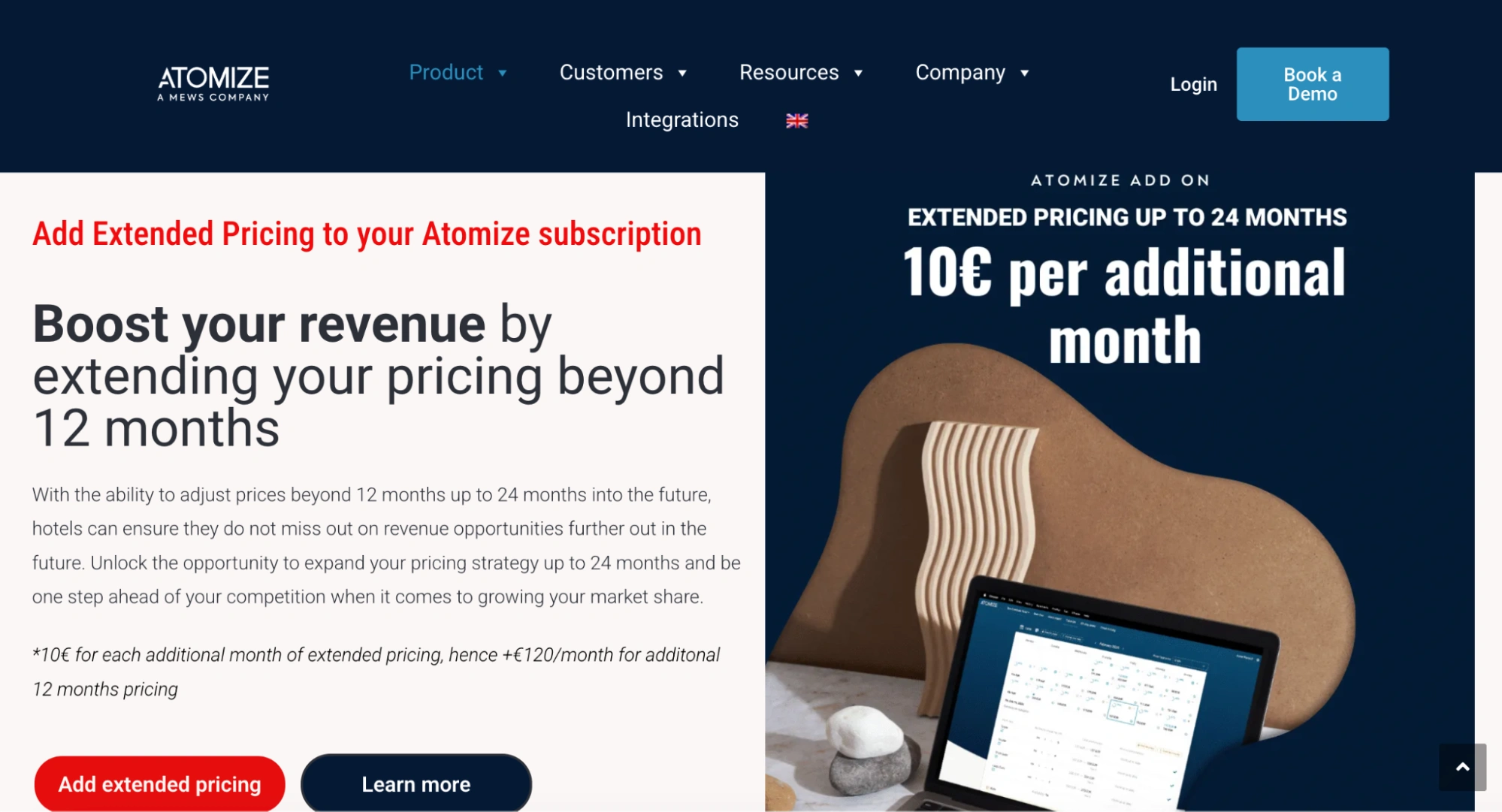
Atomize offers flexible pricing with optional extended pricing, letting hotels push forecasts and pricing strategies up to 24 months into the future. Most RMS systems only capture demand for 12 months, giving Atomize a significant competitive advantage.
Some of its key highlights include:
- Extended pricing: Add 12 more months of pricing for €10/month, allowing hotels to forecast and optimize revenue 730 days ahead.
- Dynamic, real-time rates: Atomize continuously updates rates for all room types, ensuring hotels capture peak demand and maximize earnings, even for events announced more than a year in advance.
- Market advantage: By pricing well above competitors, hotels maintain strategic control over market share and respond quickly to demand spikes.
Atomize emphasizes continuous, automated revenue maximization. Its pricing is proactive and dynamic, designed to outpace competitors in fast-moving markets.
C. Which approach delivers the most adaptable pricing strategy?
Winner: ampliphi RMS
While Atomize excels at long-term forecasting and real-time rate updates, ampliphi RMS wins on adaptability and strategic precision. ampliphi structures pricing around how hotels compete, rather than just time horizons or add-ons. Its tiered approach provides actionable alerts, competitive depth, and decision-speed tools that help teams not just react to demand, but dominate their market.
Atomize suits hotels that prioritize extended pricing visibility and continuous dynamic updates, particularly for properties planning far ahead or chasing peak events. However, ampliphi’s strategic pricing tiers give hotels the flexibility to scale, react, and act with precision in every market scenario, making pricing a true strategic weapon rather than a forecasting tool.
2. Pricing engine approach
Hotels need a pricing engine that reacts instantly to shifts in demand, seasonality, events, and competitor pricing. The right system captures every revenue opportunity while reducing manual work.
Here’s how ampliphi RMS and Atomize handle real-time pricing optimization:
A. Pricing approach in ampliphi RMS

ampliphi RMS continuously updates room rates in real time, factoring in demand fluctuations, seasonal trends, local events, and competitor moves. Its engine allows hotels to adjust pricing smoothly and strategically, maintaining guest trust while capturing maximum revenue.
How this works in practice:
- Hotels facing high-demand weekends or events see rates rise incrementally as rooms fill, protecting guest relationships while maximizing RevPAR.
- The system updates OTAs and direct booking channels simultaneously, eliminating manual delays.
- Teams spend less time on repetitive tasks and more time on strategy, guest engagement, and revenue planning.
By automating these adjustments, ampliphi RMS delivers agility and precision without adding operational overhead. Hotels using the platform report up to a 35% increase in RevPAR, making dynamic pricing a real competitive advantage.
B. Pricing approach in Atomize
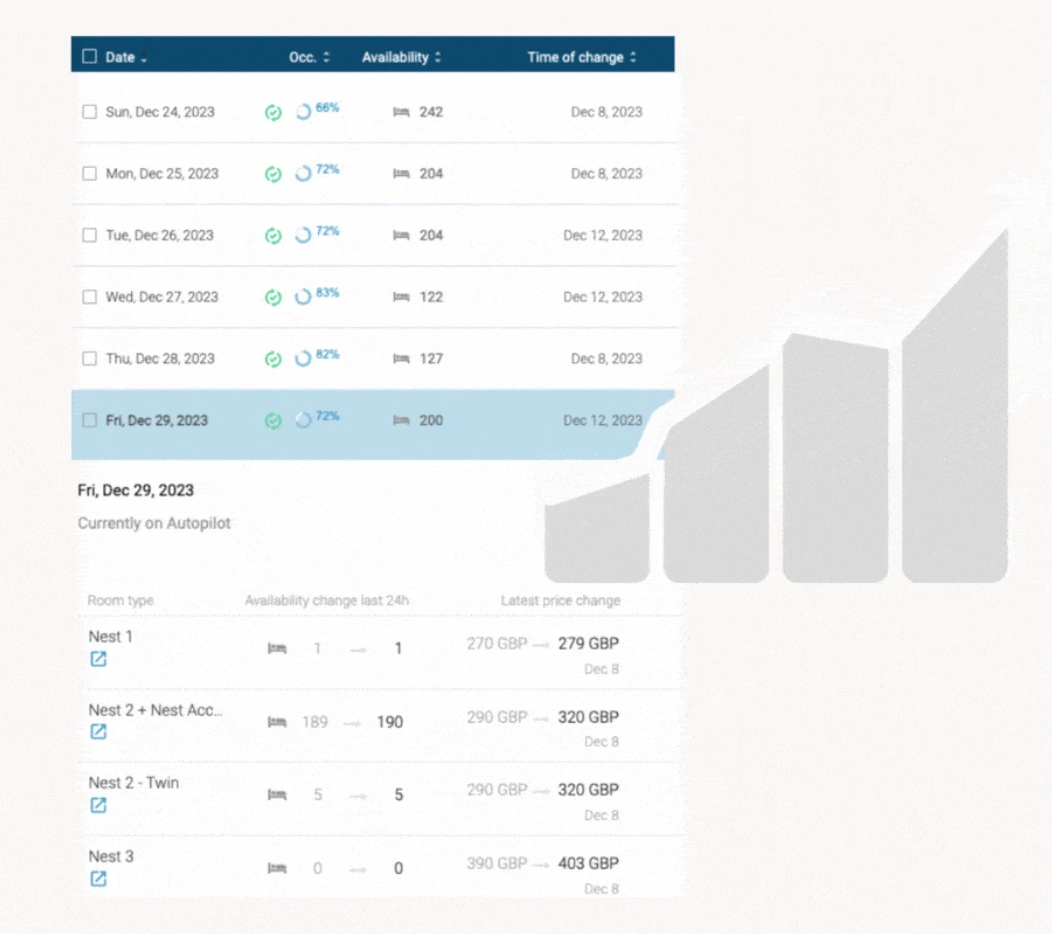
Atomize focuses on real-time price optimization and long-term forecasting to capture every revenue opportunity. Its engine continuously retrieves and analyzes internal and external market data, dynamically adjusting rates for all room types.
Some of its key benefits include:
- Immediate revenue capture: Hotels respond instantly to surges in demand, such as events or seasonal peaks, and can maximize room rates within seconds.
- Market advantage: Continuous, real-time updates help hotels stay one step ahead of competitors, maintain market share, and optimize high-demand periods.
- Extended visibility: Rates can be dynamically pushed live up to 365 days in advance, ensuring hotels don’t miss revenue opportunities.
- Revenue boost: Activating Atomize’s real-time engine can deliver an additional 4–5% increase in revenue, complementing long-term pricing strategies.
C. Which platform excels in real-time pricing?
Winner: ampliphi RMS
ampliphi RMS turns real-time pricing into a strategic advantage, not just a forecasting tool. Atomize delivers continuous updates, but ampliphi empowers hotels to act smarter, faster, and more profitably.
3. Automation & workflow
The RMS that triggers the right price at the right moment separates reactive hotels from market leaders. Automation and workflow efficiency directly impact how quickly teams can capture demand and optimize revenue.
Here’s how ampliphi RMS and Atomize handle it:
A. Automation & workflow in ampliphi RMS
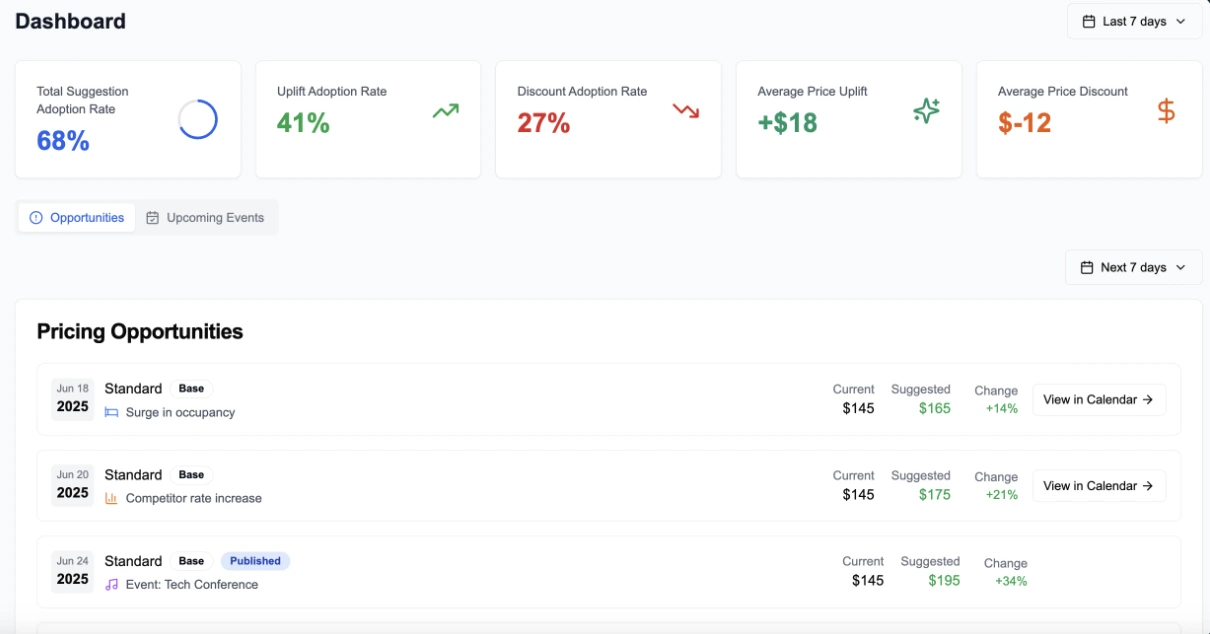
ampliphi RMS uses AI-driven optimization to continuously monitor bookings, occupancy, market trends, and competitor pricing. The system automatically adjusts rates within defined floors and ceilings while sending proactive alerts for events that could drive demand.
Here’s what it does:
- Tracks live bookings, occupancy, and competitor rates 24/7
- Adjusts rates automatically according to pricing rules
- Flags upcoming events and demand spikes for timely interventions
By eliminating spreadsheet crunching and repetitive tasks, ampliphi frees your team to focus on upselling, guest engagement, and strategic planning. Hotels gain agility without sacrificing control.
B. Automation & workflow in Atomize
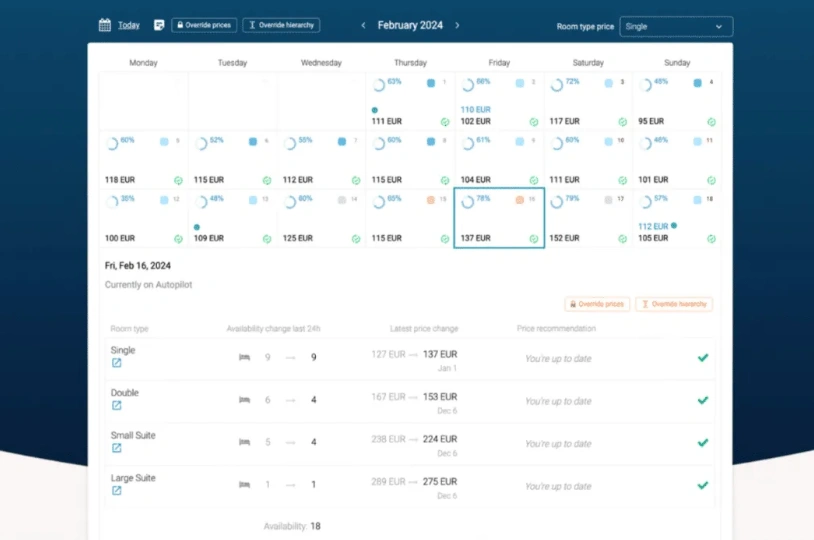
Atomize automates pricing with its Autopilot and Scheduled Automation features, so that rates stay optimal around the clock for up to 730 days in the future.
How Atomize works in practice:
- Autopilot: Lets the system implement price recommendations continuously, without human intervention, while maintaining your pricing hierarchy.
- Real-time reaction: Automatically updates rates to respond instantly to market shifts, ensuring hotels capture every revenue opportunity.
- Time savings: Customers report saving 12–20 hours per week by letting Atomize handle pricing automatically.
- Scheduled automation: Gives control over when Autopilot acts, such as weekends or special events, balancing automation with oversight.
Atomize is designed for hotels that want hands-off pricing with maximum coverage, letting the system continuously optimize revenue across all room types and channels.
C. Which platform excels in automation & workflow?
Winner: ampliphi RMS
Atomize works best for hotels seeking fully automated, hands-off pricing, particularly those prioritizing time savings. ampliphi RMS, however, combines AI automation with market intelligence to give hotels full control and agility.
4. Controls: Guardrails, Overrides, Strategy Rules
Dynamic pricing delivers the best results when it operates within clear guardrails, supports manual overrides, and follows pre-set strategies aligned with revenue goals. These controls ensure hotels can maximize profit without losing oversight or flexibility.
Here’s how ampliphi RMS and Atomize handle pricing controls:
A. Controls in ampliphi RMS
ampliphi RMS gives revenue teams full confidence while its AI recommends optimal rates. The system monitors competitor moves, tracks upcoming market events, and highlights demand trends before they occur, letting teams act proactively rather than react under pressure.
Some of its key features include:
- Event & calendar-driven tracking: AI detects demand spikes and shifts using your rate calendar to flag revenue opportunities early.
- Competitor pricing alerts: Receive timely notifications to respond before competitors impact your positioning.
- Predefined strategy rules: Set floors, ceilings, restrictions, and promotions in advance to safeguard revenue.
These controls protect pricing during high-demand periods, uncover opportunities in slower windows, and give teams the confidence to manage capacity strategically without second-guessing the system.
B. Controls in Atomize
Atomize balances automation with user-defined controls, letting hotels guide the AI while maintaining alignment with business strategy. Here’s how:
- Establish foundations: Define the minimum and maximum rates for each room type, giving Atomize a framework for solid recommendations that align with your pricing strategy and brand standards.
- Plan for special conditions: Adjust pricing during high and low seasons using historical and forecast data, event announcements, and market intelligence.
- Adapt to one-off situations: Tweak floors, ceilings, or seasonal rates for special events to maximize revenue without disrupting overall strategy.
- Protect your brand: Make quick, precise adjustments to pricing rules to stay competitive while avoiding price erosion.
C. Which platform excels in controls and strategy rules?
Winner: Tie
Both platforms provide strong controls, but ampliphi RMS delivers superior strategic guidance and proactive alerts. Atomize excels at providing flexible guardrails and hands-on overrides, making it ideal for teams that want to guide automation closely. However, ampliphi RMS combines automation, predictive insights, and strategic safeguards, turning controls into a competitive advantage rather than just a safety net.
5. Integrations: PMS, channel manager, and BI
Integrations make or break automation. The RMS that connects seamlessly with your tech stack turns every system into a synchronized revenue engine, reducing manual work and keeping rates accurate across all channels.
Here’s how ampliphi RMS and Atomize handle integrations:
A. Integrations in ampliphi RMS
ampliphi RMS integrates directly with major hotel systems, including PMS platforms like roommaster PMS and CMS Hospitality. Rate recommendations automatically flow into reservations and availability, eliminating the need for manual updates.
The system also links to channel managers, ensuring OTAs and direct booking channels stay synchronized in real time. For hotels with PMS or other systems not yet listed, ampliphi works with properties to customize integrations, so every property can maintain smooth workflows without compromise.
B. Integrations in Atomize
Atomize emphasizes broad connectivity and smooth interoperability across hospitality tech stacks. It integrates with PMS platforms to manage reservations, check-ins, and guest data, and syncs with Channel Managers to distribute inventory across multiple OTAs.
The platform also connects with Central Reservation Systems (CRS), helping hotels manage bookings from different sales channels in a single workflow. Atomize focuses on streamlining operations, ensuring data flows automatically between systems so teams can focus on revenue strategy rather than manual updates.
C. Which platform excels in integrations?
Winner: Tie
Both platforms offer robust integration capabilities that support seamless automation and real-time updates.
- ampliphi RMS excels at custom integrations for properties with unique systems and ensures rate recommendations sync smoothly across PMS and channel managers.
- Atomize shines in broad connectivity, supporting PMS, CRS, and multiple channel managers, creating a unified workflow for larger or more complex tech stacks.
However, the best choice depends on your property’s existing systems. ampliphi is ideal for tailored integration needs, while Atomize offers expansive connectivity out-of-the-box.
6. Reporting: How quickly owners understand decisions
Even the best pricing strategy can fail without real-time visibility into KPIs, booking pace, and competitor behavior. A strong RMS turns raw data into insights that owners and teams can act on instantly, helping hotels optimize revenue and stay competitive.
Here’s how ampliphi RMS and Atomize deliver reporting and business intelligence:
A. Reporting in ampliphi RMS

ampliphi gives independent hotels the power of advanced analytics without needing a dedicated data team. The system tracks competitor pricing, booking trends, and event-driven demand spikes, translating them into actionable insights.
Here are some of its key capabilities:
- Predicts reservation surges based on events, holidays, and market shifts.
- Alerts teams to underpriced periods, ensuring hotels maximize revenue without eroding guest trust.
- Supports dynamic adjustments across channels, letting boutique hotels or large properties react quickly to market changes.
For example, a hotel near a conference center can anticipate an uptick in bookings and gradually increase rates, capturing maximum revenue while maintaining guest satisfaction.
B. Reporting in Atomize
Atomize provides layered business intelligence across property, room type, and competitor levels. Its reporting tools help hotels stay on top of KPIs, market positioning, and future demand patterns.
Some of its key features include:
- Visualizes price positioning versus competitors across all inventory.
- Tracks real-time price elasticity by room type for each arrival date.
- Integrates with leading BI partners, including Revenue Insight, HotelIQ, and Avalon, for hotels that need advanced analytics beyond the RMS.
This approach allows teams to monitor trends, forecast demand surges, and make confident revenue decisions, even for multi-property portfolios.
C. Which platform helps owners understand decisions faster?
Winner: Tie
Both platforms provide actionable reporting, but in different ways:
- ampliphi RMS shines for independent hotels and teams who want immediate, AI-driven insights with clear, proactive alerts, allowing rapid reaction to market changes.
- Atomize excels for hotels needing layered BI across properties and room types, with integration options for advanced reporting and forecasting tools.
Ultimately, the best choice depends on your needs:
- ampliphi for real-time, intuitive insights that translate immediately into action.
- Atomize for deep, customizable BI with multi-property and room-level analytics.
7. Implementation
Implementation speed directly impacts how quickly teams see measurable results.
Here’s how ampliphi RMS and Atomize approach onboarding and deployment:
A. Implementation in ampliphi RMS
ampliphi RMS gets hotels up and running quickly. Teams can link their PMS in minutes, immediately feeding live booking and rate data into the system. From there:
- Define pricing goals, floors, ceilings, and strategy rules.
- Let the AI begin optimizing rates in real time across all channels.
- Start capturing demand opportunities without manual effort.
This fast implementation means revenue teams begin generating impact almost immediately, with minimal setup overhead or learning curve.
B. Implementation in Atomize
Atomize focuses on smooth integration and hands-on customization. Teams connect PMS and channel managers, set pricing hierarchies, and define strategy rules. Depending on property size and the level of extended forecasting required, setup may involve additional configuration to ensure 24-month pricing visibility and real-time rate optimization.
While Atomize offers powerful automation and BI integrations, properties that leverage extended pricing or multi-property setups may need slightly longer setup periods to maximize the system’s potential.
C. Which platform delivers faster time‑to‑value?
Winner: ampliphi RMS
Both platforms can integrate with PMS and channel managers, but ampliphi RMS prioritizes rapid deployment and immediate revenue impact. Its streamlined setup, combined with proactive AI-driven optimization, allows hotels to start capturing opportunities within days rather than weeks.
Why Hotels Pick ampliphi RMS

ampliphi RMS combines real-time AI pricing, clear insights, and seamless operations in one platform. It helps revenue teams act fast, capture more revenue, and stay ahead of competitors.
Here’s why hoteliers love ampliphi RMS:
- AI adjusts rates continuously based on bookings, competitors, OTAs, and events.
- Recommendations come with context for confident decisions.
- PMS and channel integrations reduce manual work.
- Forward-looking signals flag high-demand periods and promotional opportunities.
What does this mean in practice?Teams save hours weekly, respond instantly to market changes, and can boost ADR and RevPAR by up to 35%. |
Why Hotels Pick Atomize
Atomize gives hoteliers a powerful combination of automated pricing, real-time market insight, and operational efficiency. Its AI-driven approach continuously analyzes bookings, market demand, competitor rates, and future trends to make pricing decisions that capture more revenue with less manual effort.
Some of the key reasons hotels pick Atomize:
- Automated dynamic pricing adjusts rates in real time based on bookings, competitors, and demand.
- Forward-looking forecasts up to 24 months help hotels anticipate demand and maximize revenue.
- Flexible control lets teams guide automation while saving time.
- Integrations with PMS and channel managers reduce manual work.
What does this mean in practice?Revenue managers get more time back, pricing stays optimized even when markets shift, and teams can make confident decisions based on data. |
Use-Case Scenarios: Where Each Platform Shines
Different hotels have unique needs, and the right RMS depends on property size, seasonality, team expertise, and portfolio scale.
| Use‑Case Scenario | Best Fit with ampliphi RMS | Best Fit with Atomize |
| 30–80 Room Boutique Hotel | Ideal for boutique properties that need AI pricing & market signal insights without a large revenue team. | Great choice if the boutique hotel wants hands‑off automation and real‑time pricing up to far future dates, with easy setup and minimal day‑to‑day tweaking. |
| Hotel with Strong Seasonal Swings | Strong fit when demand varies dramatically; ampliphi’s event/season‑aware forecasting helps capture peak/leisure swings and optimize both high and off‑peak periods. | Works well when extended forecasting (up to 24 months) helps anticipate seasonal demand early and capture long‑term seasonal opportunities. |
| 100+ Rooms with an Experienced Revenue Manager | Excellent for experienced RMs who want deep strategic controls, competitive insights, and clear signals to craft pricing strategies. | Excellent for experienced teams that value continuous automation plus flexible override control. |
| Small Group (2–5 Properties) | Designed to scale across multiple hotels with centralized oversight plus local flexibility, making it easy to manage a portfolio from one place. | Strong option for groups looking for consistent automated pricing across properties and forecasting that supports group‑wide strategy with little to no manual coordination. |
RMS Selection Checklist: What to Check Before Choosing
Before investing in a revenue management system, make sure it meets your hotel’s operational needs while driving maximum revenue across rooms, channels, and seasons.
Use this checklist to guide your decision:
| Factor | What to Evaluate |
| Pricing Approach |
|
| Real-Time Pricing Engine |
|
| Automation & Workflow |
|
| Controls & Strategy Rules |
|
| Integrations |
|
| Reporting & Insights |
|
| Implementation & Time-to-Value |
|
| Scalability & Multi-Property Support |
|
Which Revenue Management System is Right for You?
Your hotel succeeds when you match its size, team, and revenue goals with the right RMS. ampliphi RMS delivers strategic flexibility, competitive alerts, and fast implementation. Atomize provides extended forecasting, automated pricing, and multi-property reporting.
The right system lets your team make confident decisions, capture every revenue opportunity, and stay ahead of the market. Use this guide to select the RMS that fits your property and maximizes revenue.
If you’re still confused, you can always reach out to us! Book a demo with ampliphi RMS and see how it can boost your revenue and simplify your pricing strategy.