

TL;DR
|
“Where should my hotel stand in the market?”
It’s a question every hotel owner and revenue manager faces. But understanding the hotel industry today takes more than looking at nearby competitors or star ratings.
Hotel market intelligence gives hoteliers the tools to see beyond surface numbers. It helps track market dynamics, identify emerging trends, and anticipate shifts in traveler behavior across online travel agencies (OTAs) and other booking channels.
With the right insights, hotels can adjust their revenue strategy in real time, maximize opportunities, and stay ahead of competitors.
In this article, we break down what hotel market intelligence really is, why it matters, and how hotels can use it to make smarter, data-driven decisions every day.

What is Hotel Market Intelligence?
Hotel market intelligence refers to the systematic process of gathering, analyzing, and interpreting data about local destinations and competitors. It gives hotels a clear picture of:
- Competitor pricing
- Market demand
- Booking trends
- Demand patterns
- Local market conditions
Compared to basic reporting, hotel market intelligence focuses on external signals. It looks beyond your hotel’s performance to help you understand the competitive landscape. The primary purpose of hotel market intelligence is to summarize the competitive landscape at any given time.
Why is Hotel Market Intelligence Important?
The modern hospitality industry faces constant uncertainty. Demand shifts quickly due to economic trends, traveler behavior, and unexpected disruptions.
In fact, it is highly influenced by macroeconomic factors, making market intelligence crucial for understanding demand fluctuations. According to a recent study, hotel occupancy-related data reporting increased by 18% in 2024, as more properties adopted digital intelligence platforms to analyze booking patterns and traveler segmentation.
Here’s why it matters:
1. Smarter pricing decisions
Hotels use dynamic pricing strategies to adjust rates based on real‑time market demand. By watching competitor pricing and market trends, you can adjust your room rates to forecast and maximise occupancy and revenue per available room (RevPAR).
In fact, AI‑driven pricing and demand analysis can improve RevPAR by up to 35%. When you track these patterns, you can optimise pricing, increase overall revenue, and stay competitive across distribution channels.
2. Improved operational efficiency
One of the biggest advantages of market intelligence is improved operational efficiency in hotels. When you see demand coming, you can run your hotel more efficiently.
Additionally, you can schedule the right number of staff, manage supplies better, and reduce waste. That keeps operations smooth and guests happy.
3. Increased competitive advantage
Market intelligence also helps hotels understand the competitive landscape and identify opportunities or threats that could shape their performance. This information helps you make smarter decisions about pricing, promotions, and services.
About 86% of hotels use AI-driven forecasting and analytics, and these hotels report 17% higher revenue than properties that rely on older methods. When you understand the market in real time, you can act quickly, take advantage of new opportunities, and avoid mistakes that could cost money.
As a result, your hotel gains a strong position in a crowded market and helps you grow even when conditions are uncertain.
What Data Does Hotel Market Intelligence Include?
To deliver meaningful data insights, hotel market intelligence pulls from multiple data sources. For example, key market intelligence data includes competitor pricing, market demand trends, guest preferences, and local events.
Let’s break it down.
1. Internal data
Your hotel’s own records show how your property has performed over time. This includes:
- Booking history
- Occupancy rates
- Revenue performance
- Guest preferences
Looking at these trends helps you understand what works, spot patterns, and plan ahead. Internal data sets the foundation because it reflects your hotel’s real operations.
2. External data
External data shows what is happening in the local market and with competitors. This includes:
- Competitor pricing and promotions
- Demand trends from OTAs
- Market demand patterns
- Local events, weather, and changes in the economy
Combining this information with your internal data gives a full picture of the forces that affect demand. You can see what is influencing guest behavior and adjust your strategies with confidence.
3. Booking and demand data
Hotels study booking and demand trends to understand guest behavior. This includes:
- Past booking patterns
- Current demand trends
- Projected future demand
These insights help you forecast bookings more accurately. You can prepare your staff, manage inventory, and plan pricing so your hotel runs smoothly and revenue grows.
4. Customer data
Understanding your guests helps you make their stay better and more personal. This includes:
- Guest preferences
- Feedback and reviews
- Behavior patterns
Hotels use this information to improve guest experiences. You can provide services that match what your guests want, build stronger relationships, and encourage repeat visits.
5. Market and competitor data
These insights show you where you stand in the market. It includes:
- Competitor pricing and offers
- Promotions and special packages
- Market shifts and trends
With market and competitor data in hand, you can adjust pricing, promotions, and services to attract more guests and keep pace with the competition.
Hotel Market Intelligence vs Business Intelligence
As we mentioned earlier, market intelligence shows you what’s happening outside your hotel. It helps you spot trends, track competitors, and uncover opportunities or risks that could affect your performance.
Business intelligence, on the other hand, focuses on what’s happening inside your hotel. It looks at data from your property management system (PMS), point-of-sale systems, and customer relationship management tools.
This internal insight is key to running an effective revenue management strategy. A business intelligence solution organizes your data and shows you how you’re performing against your goals.
With this clarity, you can identify areas for improvement, adjust your strategies, and make smarter decisions to increase revenue.
How Hotel Market Intelligence Software Works
Hotel market intelligence software collects and organizes data from many sources to give hotels a clear picture of their market and guests. It works by bringing together information from inside your hotel and from the wider market so you can make smarter decisions every day.
The process usually follows a few steps:
1. Data collection
The software gathers data from multiple sources. This includes:
- Your hotel’s own performance data, such as bookings, occupancy, and revenue
- Competitor pricing and promotions
- Guest behavior and feedback
- Market trends, local events, and economic shifts
Collecting data from multiple sources provides a comprehensive view of what is happening both inside and outside your hotel.
2. Data analysis
Once the software collects the data, it analyzes it to identify patterns and insights. It shows demand trends, reveals how your pricing compares with competitors, and highlights what guests like and dislike.
Analysis transforms raw numbers into meaningful information that guides your decisions.
3. Forecasting
The software uses historical and current data to predict future trends. It forecasts:
- Room occupancy
- Booking patterns
- Seasonal demand fluctuations
Accurate forecasts help you prepare for busy periods, adjust staffing, and optimize pricing so your hotel performs at its best.
4. Reporting and visualization
The software presents insights through easy-to-read dashboards and reports. You can quickly see trends, compare your hotel to competitors, and track performance over time. Visualizing the data helps you act quickly and confidently.
5. Decision support
The software helps hotels make better decisions. It guides the setting of room rates, the planning of promotions, and the management of resources.
The insights show what will work and what might need adjustment, which keeps operations smooth and guests satisfied.
How Hotels Use Market Intelligence in Real Life
In theory, market intelligence gives you all the right data. But in reality, many independent hotels still struggle with one key challenge. They simply do not have clear visibility into what is happening around them.
This is exactly where ampliphi RMS comes in.
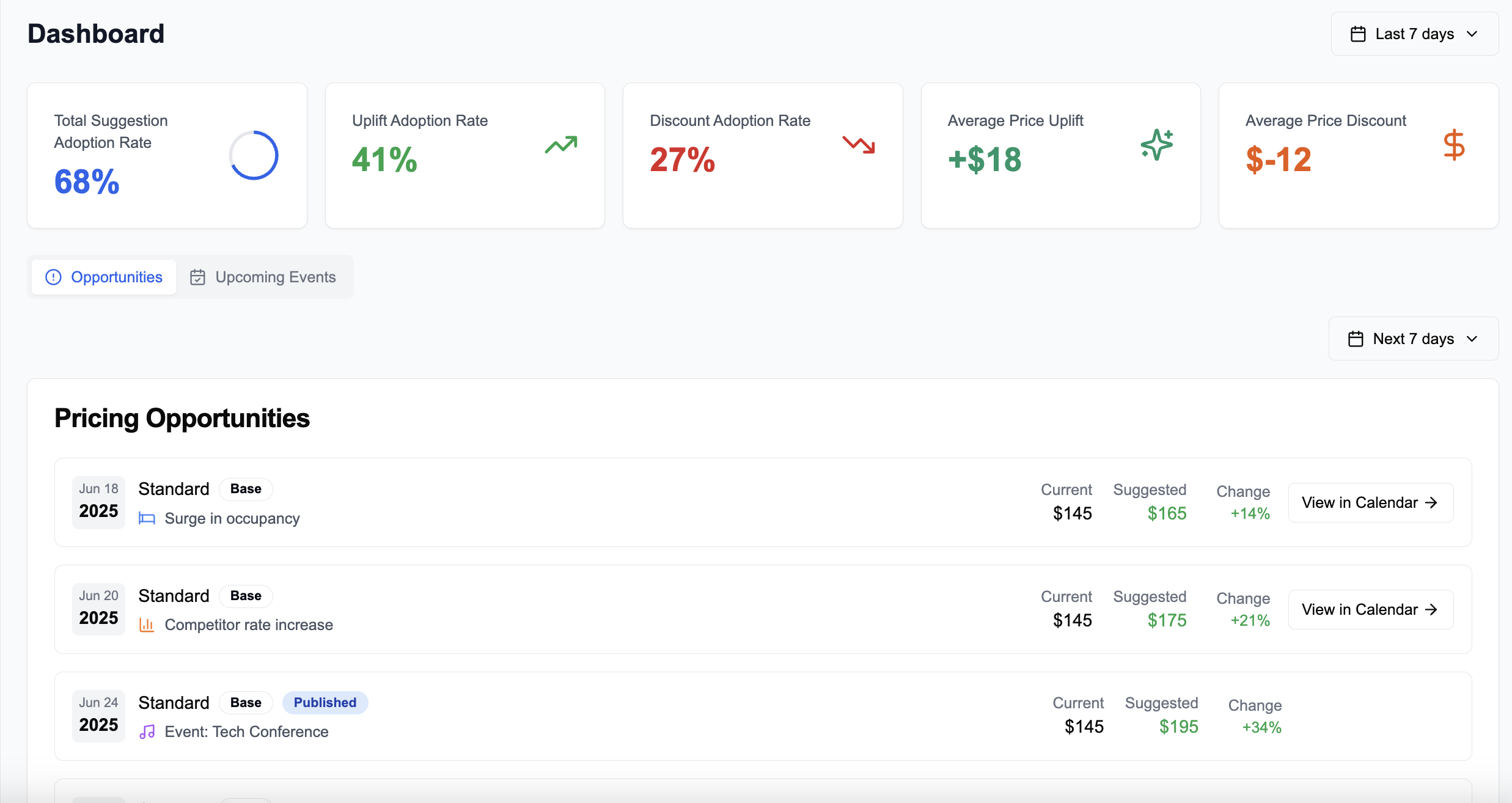
As an AI-powered revenue management software, ampliphi is designed for independent hotels and hospitality groups that need strong revenue insights without adding complexity to their operations. It brings together real-time market intelligence and turns it into something you can actually use in your daily decisions.
With ampliphi’s market intelligence capabilities, hotels can:
- Track competitor pricing movements and respond at the right time
- Spot demand spikes linked to events or local activity early
- Monitor booking pace across channels and adjust before it is too late
This gives smaller properties the kind of visibility and control that was once limited to large hotel chains.
Now, let’s look at how this actually plays out in day-to-day hotel operations.
A. Starting the day with a clear, complete picture
Most hoteliers begin their day by trying to answer a simple question. Where do we stand today, and what should we focus on next?
With Ampliphi, that answer comes instantly. The dashboard brings together your key metrics like revenue, occupancy, ADR, and RevPAR in one place, so you are not jumping between reports. But it does not stop at just showing what already happened.
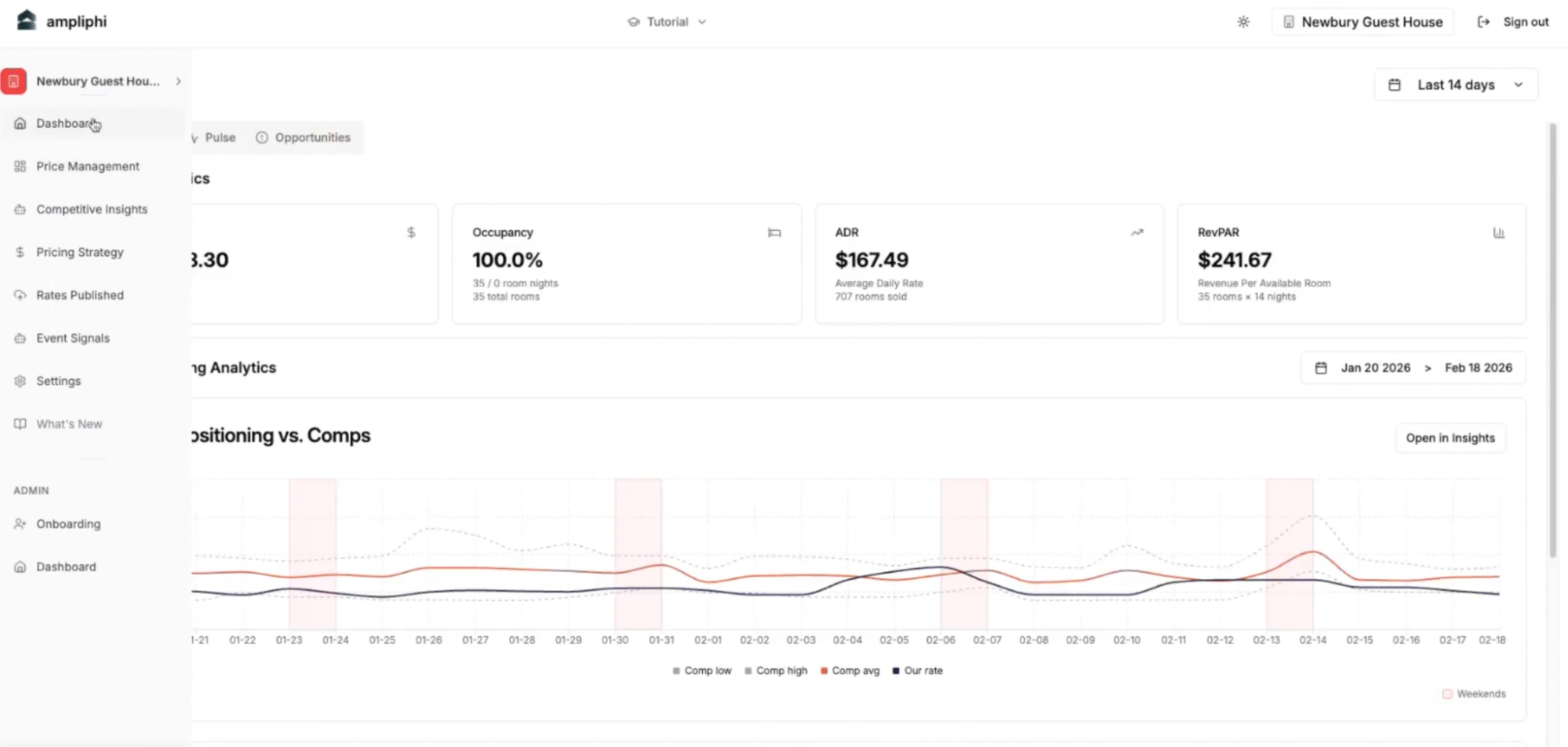
What makes this more useful is how the dashboard is structured. The top section focuses on past performance, while the bottom section shows a forward-looking view of your market. You can see how your occupancy is trending and where your pricing sits compared to competitors.
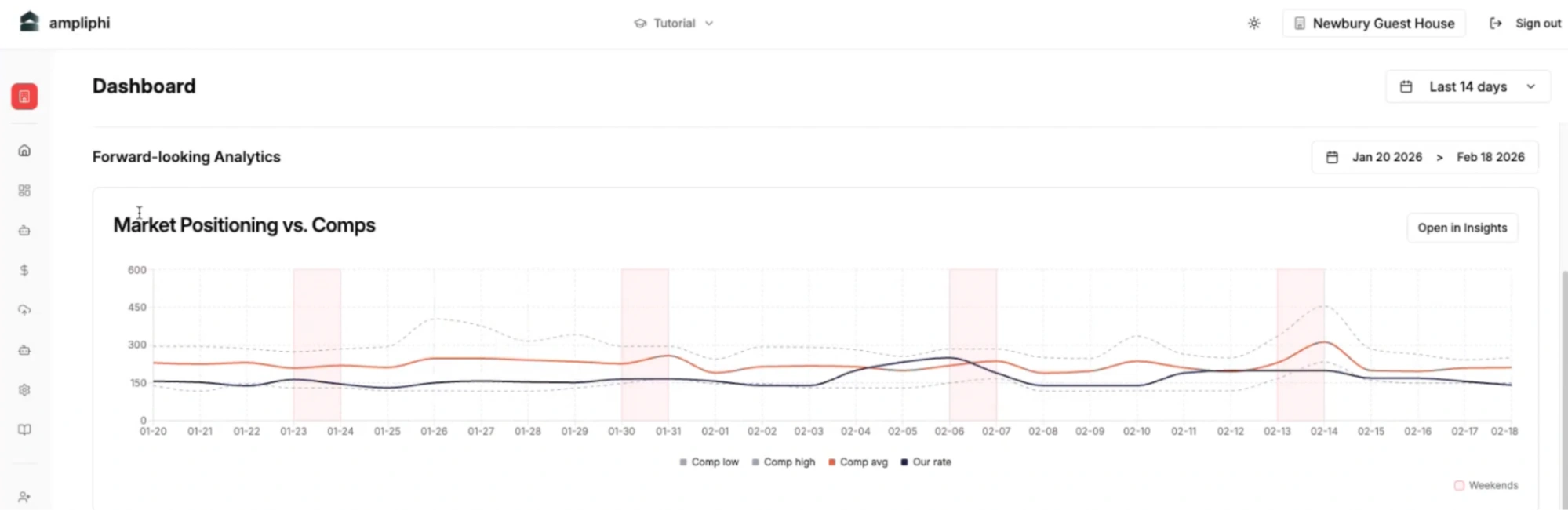
This shift from backward-looking reports to forward-looking insights helps you move from reviewing numbers to planning your next move.
B. Keeping up with competitors without constant tracking
Traditionally, competitor monitoring required time and effort. You would check a few rates, make a note, and hope nothing changed in the next few hours.
ampliphi simplifies this through its competitor insights and Pulse view. You can see where you stand relative to the lowest-priced competitor, the market average, and your direct competitors.
The Pulse view adds another layer by showing market snapshots and smart alerts. If a competitor drops their price significantly or changes rates suddenly, the system flags it for you.
You do not have to keep checking. You stay informed as changes happen, which makes your response faster and more accurate.
C. Responding to real demand, not assumptions
One of the biggest gaps in traditional revenue management is reacting too late to demand. By the time bookings increase, pricing opportunities are already lost. ampliphi addresses this through its Events module.
You can see upcoming events, along with their estimated impact on demand. The platform does not just list events. It connects them to expected room nights, revenue impact, and accommodation demand.
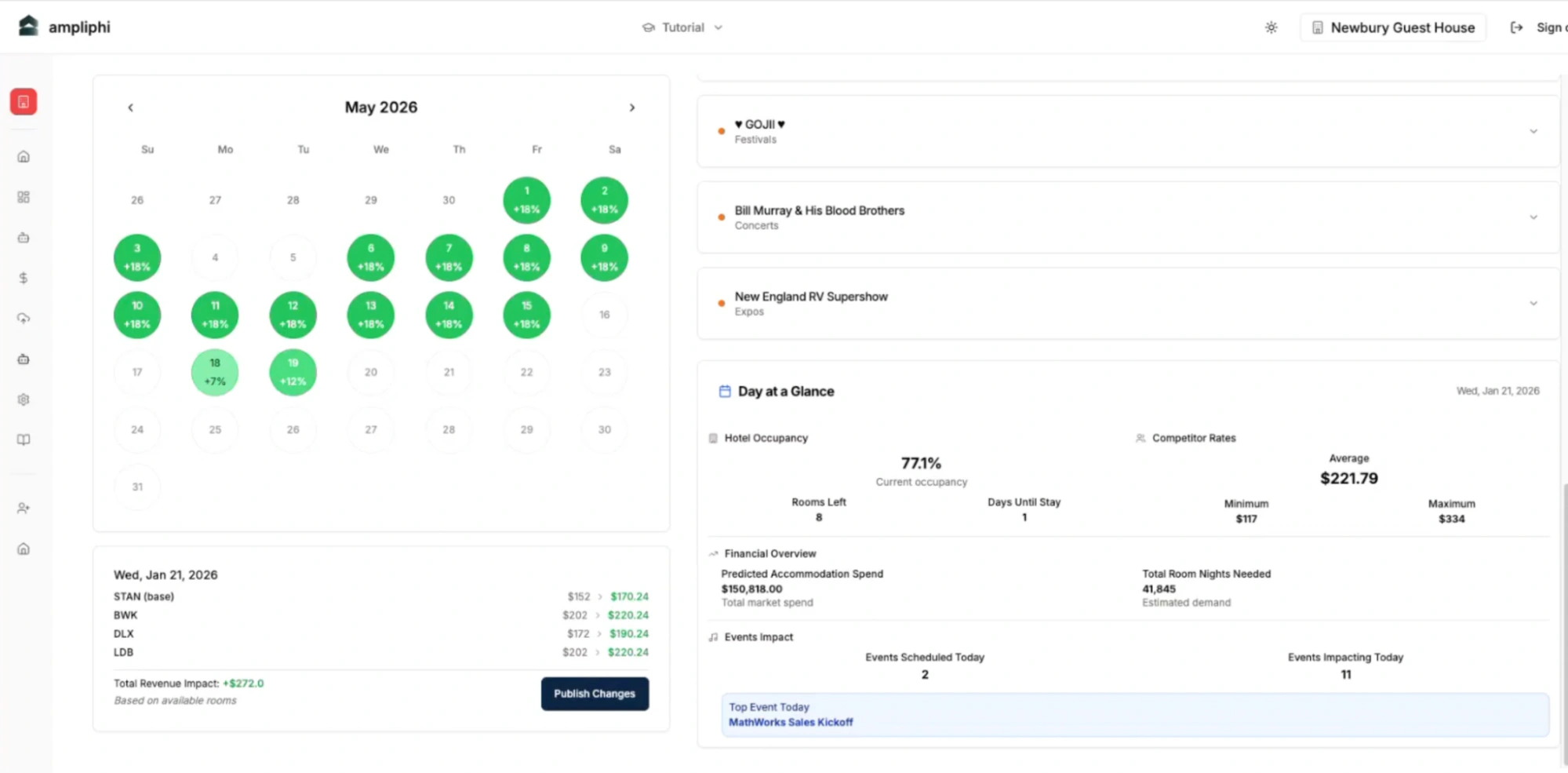
The Day at a Glance view summarizes all of this in one place. Instead of reviewing multiple event cards, you get a clear snapshot of total demand impact, financial overview, and expected occupancy shifts.
This allows you to adjust pricing earlier, while demand is still building, instead of reacting after the spike.
D. Focusing only on the pricing decisions that matter
Having access to data does not always make decisions easier. In many cases, it creates more confusion than value.
ampliphi highlights opportunities with real impact, especially where a pricing change could significantly improve revenue. These are not minor adjustments. They are recommendations where a change could significantly affect revenue. This helps you focus on high-value decisions instead of getting lost in constant small changes.
It also makes your workflow more efficient. This way, you spend less time analyzing and more time acting.
E. Understanding your market across channels and timeframes
Market positioning is not something you can understand in a single day. It shifts constantly, especially across weekends, events, and changing demand patterns.
ampliphi helps you see this more clearly through its multi-day view. When you switch to a longer window, like a 30-day view, you are no longer looking at isolated data points. You start to see a range forming across the market.
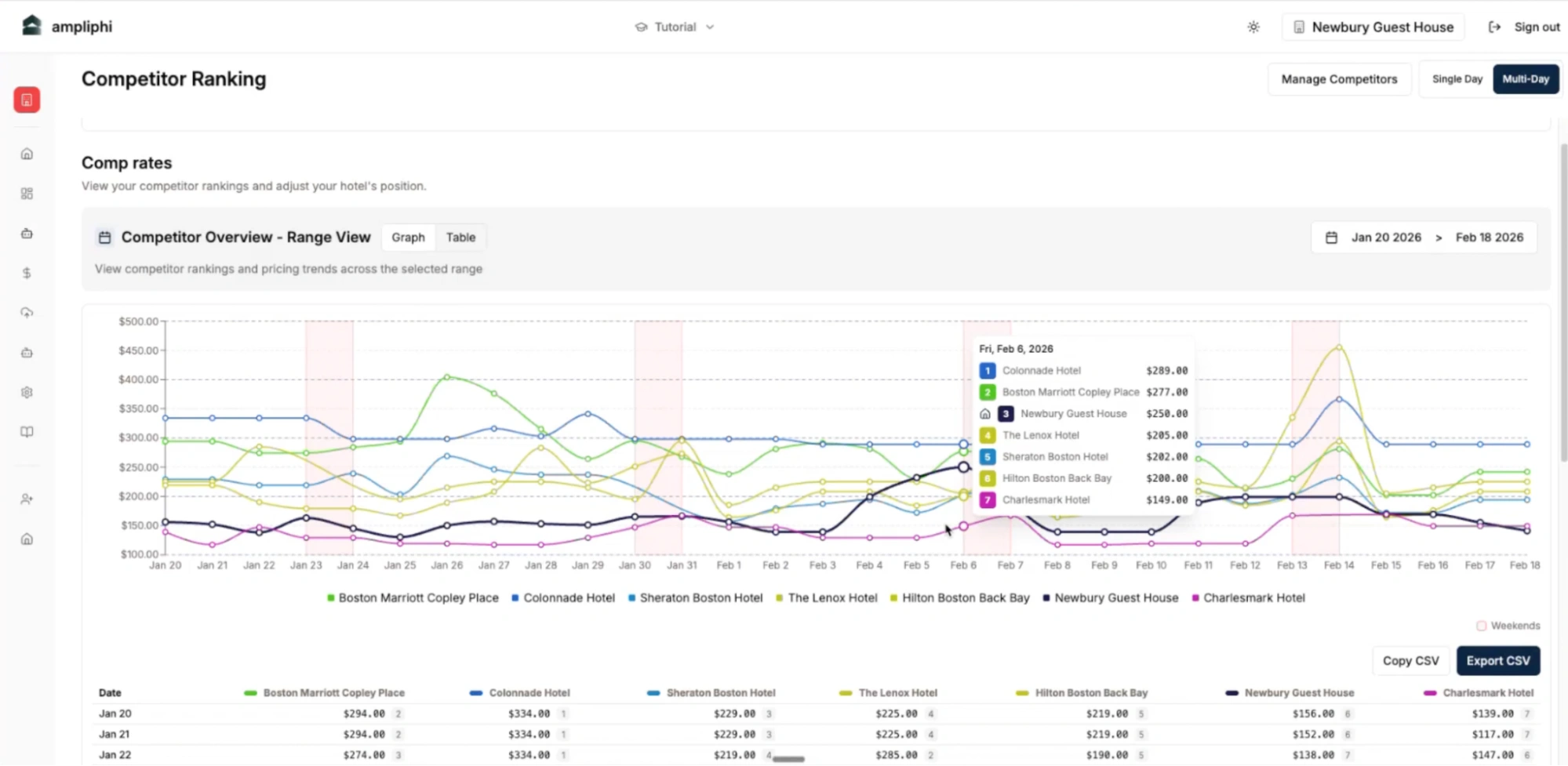
For example, you might notice that your lowest-priced competitor is at 129, while another is pricing as high as 334. At the same time, you can clearly see where your own rates sit within that range.
This makes it easier to understand not just what competitors are charging, but how they are behaving. You can spot patterns, such as how pricing changes on weekends or how certain dates trigger shifts across multiple properties. In some cases, this helps you identify demand drivers, such as an event influencing pricing, even if you were not aware of it earlier.
ampliphi also lets you break this down further through OTA-level insights.
You can see how a single hotel is priced across channels like Booking, Expedia, and Priceline, all in one place. Instead of checking each platform separately, you see how rates compare across channels and where inconsistencies might exist.
While there is also a table view available, most teams prefer the visual graph because it makes these patterns easier to grasp at a glance.
F. Connecting insights directly to your PMS
Another major challenge in hotel tech is the gap between insight and execution. You see what needs to change, but applying that change across systems is not always seamless.
ampliphi is designed to connect directly with your PMS, so when pricing decisions are made, they can reflect in your system.
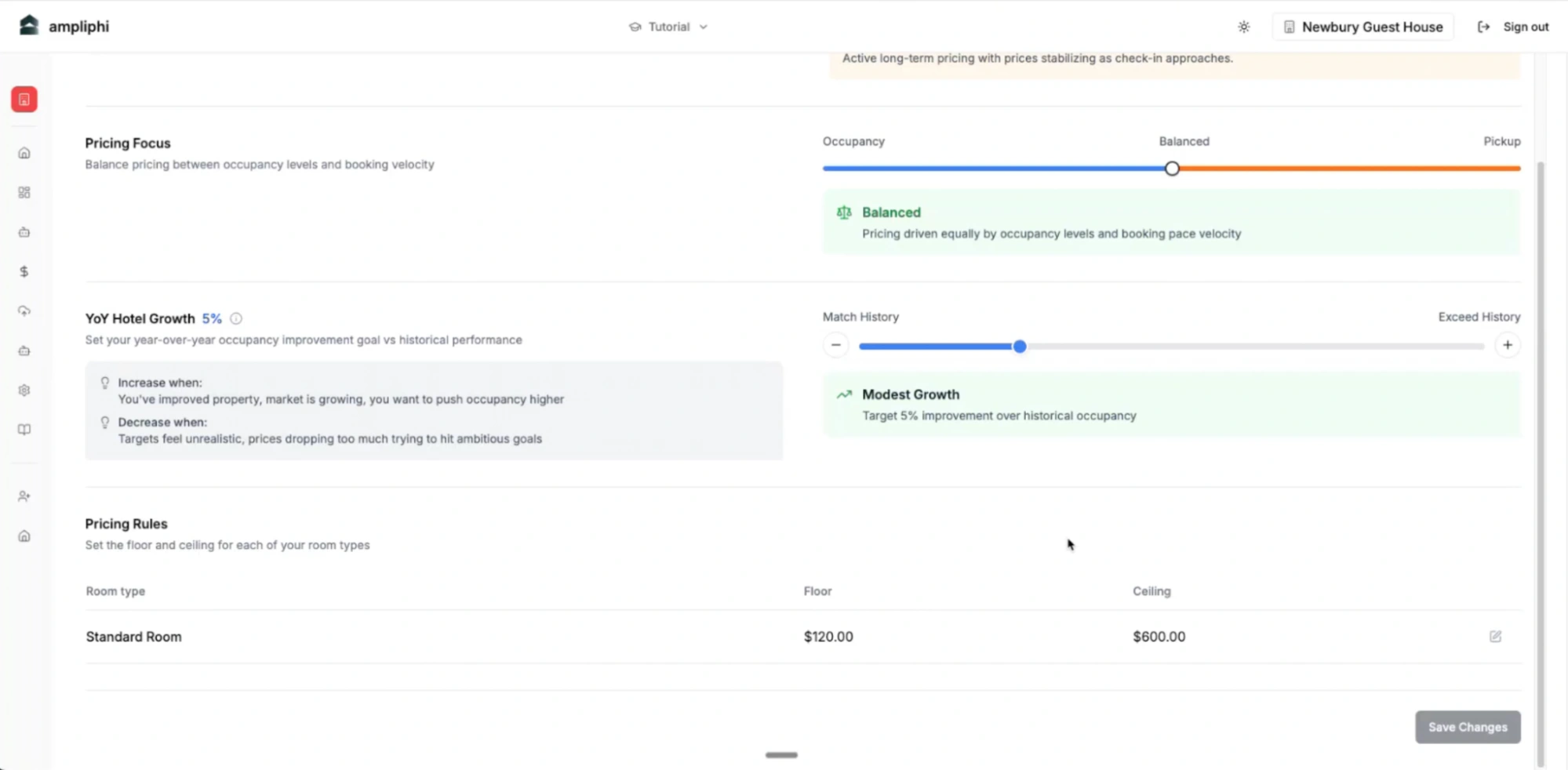
This connection is critical, as it ensures that what you analyze and what you execute stay aligned. It also highlights an important expectation from hotel teams. Hotel staff and revenue managers want to see this connection clearly, especially during demos, where a pricing change in Ampliphi should appear directly in the PMS.
When that loop is fully connected, the entire revenue management process becomes more intuitive and reliable.
📌Also read: What Makes ampliphi RMS Different From Other RMS Tools
Turn Data Into Smarter Decisions
More hotels now rely on data, not instinct, to guide pricing and strategy. Hotel market intelligence brings market trends, competitor pricing, and internal performance into one clear view.
Here’s what that looks like in action:
- See where you stand against competitors in real time
- Respond quickly to demand shifts and market changes
- Make confident pricing decisions backed by data
ampliphi RMS makes this simple with real-time market intelligence, competitor tracking, and forward-looking insights, all in one place. It highlights the pricing decisions that actually impact revenue, so you focus on what matters instead of getting lost in constant changes. You also see market shifts as they happen, which helps you act at the right time, not after the opportunity passes.
Ready to take control of your strategy? Start using hotel market intelligence with ampliphi RMS and turn every data point into revenue.
FAQs
What is market intelligence in marketing?
Market intelligence in marketing refers to the collection and analysis of external data, such as competitor activity, customer behavior, and demand trends. Businesses use it to understand market conditions, identify opportunities, and create strategies that improve targeting, positioning, and overall campaign performance.
What are the types of market intelligence?
Market intelligence includes competitor, customer, and product intelligence, as well as market trend analysis. Each type focuses on different data sources to help businesses understand demand, monitor competition, and make informed decisions.
What is business intelligence in the hospitality industry?
Business intelligence in the hospitality industry focuses on analyzing internal data, such as bookings, revenue, and operational data. Hotels use it to improve efficiency, track performance, and support revenue management decisions while enhancing guest experience and overall profitability.