
TL;DR
|

By now, you must have read at least once that implementing a modern revenue management system (RMS) typically sees anywhere between 15% and 35% lift in RevPAR. In fact, independent research and industry surveys confirm that hotels deploying AI-driven, real-time pricing and forecasting tools routinely report occupancy rate improvements of 12%, and in some cases, even higher, compared to static pricing approaches.
However, not every platform will give you the same results. Across cloud-native and AI-enhanced systems, adoption rates now exceed 80% globally as hoteliers shift away from manual spreadsheets and legacy RMS tools.
That’s why we surveyed 30+ tools and went hands-on with the best AI revenue management system for hotels to create this in-depth guide, so you don’t have to look through hype, legacy claims, or outdated benchmarks. What follows is the distilled insight gathered from direct evaluations, hospitality industry reports, user performance data, and verified use cases.
What is an AI Revenue Management System for Hotels?
An AI revenue management system (RMS) is a software tool that helps hotels set smarter prices by analyzing large volumes of internal and external data and translating them into clear pricing actions. Compared to traditional revenue management systems that depend on fixed rules, calendars, or manual overrides, AI systems learn continuously and adapt as conditions change.
These systems evaluate multiple factors, including booking pace, length of stay, channel performance, local demand drivers, and competitor pricing behavior, to recommend optimal room rates and inventory allocation. This holistic view allows hotels to price with greater precision while maintaining consistency across distribution and avoiding missed revenue opportunities.
Some of the key components of AI revenue management solutions include:
- Demand forecasting: Predicts future booking patterns based on historical data and market indicators
- Dynamic pricing: Adjusts room rates in real-time to match demand fluctuations
- Inventory management: Allocates room availability across different channels to maximize occupancy and revenue
- Market analysis: Monitors competitor pricing and market trends to inform strategic decisions
By automating complex analysis and executing decisions at speed, AI revenue management systems give hotels the ability to operate with consistency and confidence in an increasingly dynamic and competitive marketplace.

How We Evaluated the Best AI RMS Platforms
For every platform we reviewed, we scored them on the following core capabilities, as these are the features that actually move revenue in real hotel environments:
- Forecasting accuracy & prediction quality: We evaluated how well the system predicts demand, ADR, and occupancy, not just based on historical data, but on real-time indicators such as search/booking pace, local events, cancellations, and competitive pricing. Today’s top RMS solutions deliver forecast accuracy 20% better than legacy tools.
- Real-time pricing & execution automation: We tested how frequently the RMS updates rates (hourly vs daily) and whether pricing decisions occur automatically or require manual override. AI-driven systems, compared to static rule engines, update in real time and adapt dynamically to market shifts, which studies show can translate into a 20% increase in customer loyalty and retention on average.
- Channel & distribution intelligence: We assessed integration depth across CRS, OTAs, direct channels, and GDS to ensure rate parity and minimize leakage. Deep channel integration correlates with stronger ADR and occupancy performance, particularly for mid-sized and independent hotels.
- Actionable analytics & prescriptive insights: It’s one thing to show data, another to recommend actions. We evaluated tools that provide clear revenue opportunities, not just charts. AI platforms with prescriptive insights reduced reporting time by up to 40%, freeing teams to focus on strategic pricing decisions.
- Ease of use & commercial support: Ease of onboarding, dashboard clarity, and the availability of revenue science expertise during implementation were factored into our scoring.
Best AI Revenue Management Systems for Hotels (2026): A Side-by-Side Comparison
This comparison highlights the pros, cons, and best use cases of each system, so you can match the right AI revenue management platform to your hotel’s size, strategy, and operational needs.
Tool Name |
Best For |
Key Features |
Pros |
Cons |
G2 Rating |
ampliphi RMS |
Independent hotels, resorts, extended stays, and small to mid‑size groups | Real-time pricing optimization, dynamic pricing, market intelligence with competitor tracking, multi-property support, and rate calendars | Very strong dynamic pricing and real-time insights powered by AI that help independent hotels compete with larger brands; easy to integrate with PMS systems, and reduces manual rate work. | Advanced features may feel overwhelming to new users, and some strategic settings require learning | 4.5 |
Duetto |
Large hotel groups and luxury properties | Cloud-based real-time pricing engine, advanced forecasting, open pricing across segments and channels, scenario modeling, and group revenue optimization | Highly configurable analytics and revenue strategy tools that support total revenue optimization across properties; scales well for multi-property operations. | Higher cost and steeper implementation curve require revenue management expertise | N/A |
Atomize |
Mid-market hotels and boutique collections | AI-driven dynamic pricing with real-time rate recommendations, automated price updates, competitor and demand analysis, and cloud-based workflow | Easy to use with a clear interface and strong real-time automation to improve revenue; works well for properties without large RM teams | May lack deep customization for very complex rate strategies, and forecasts for long-term events can be limited | N/A |
IDeaS |
Enterprise hotel chains and large portfolios | Machine learning demand forecasting, probabilistic pricing recommendations, optimization engines for price and inventory, and deep PMS integration. | Deep analytics and forecasting power with highly customizable workflows; recognized industry leader with global adoption in large brands. | Very high complexity and cost mean a longer ramp-up time and reliance on trained RM teams | 4.8 |
Lighthouse |
Hotels wanting integrated intelligence and channel insights | Real-time market data, pricing recommendations, AI-driven pricing manager, channel manager integration for rate and availability sync | Strong real-time data feeds and transparent pricing suggestions help hotels make informed decisions; channel management built in improves distribution results. | Focus is narrower than full RMS offerings and may require pairing with other tools | 4.5 |
RateGain |
Regional hotel chains and distribution-focused groups | AI-powered commercial cloud with revenue management, distribution intelligence, demand boosting tools, pricing analytics and performance dashboards | Broad commerce focus that integrates distribution and pricing insights; high adoption in mid-sized hotel chains that need distribution channel connectivity. | RMS specifically may come as part of a broader suite rather than a standalone specialized pricing engine | 4.3 |
RoomPriceGenie |
Independent small hotels and owner-operated properties | Automated pricing recommendations, competitor pricing monitoring, simple dynamic rate adjustments daily and weekly based on demand | Simplified revenue management for smaller operators with quick implementation, affordable pricing, and easy setup for independents | Limited advanced forecasting, reporting and customization for very large operations. | N/A |
Best AI Revenue Management Systems for Hotels (2026)
Now, let’s break down the top 10 AI revenue management software tools based on real performance.
1. ampliphi RMS
ampliphi RMS gives hotels a powerful way to use pricing data from many sources, allowing your revenue team to react faster and with more confidence than before. The software collects booking activity, competitor pricing, demand shifts, and market signals, and then translates that data into pricing actions that align with real guest behavior.
You will see pricing recommendations that match live demand and clear visuals showing where your rates sit across dates and channels, so you can make decisions with real context and timing. The system updates pricing continuously based on real market activity to align rates with what guests are willing to pay at that moment.
When you connect your property management system, you will begin to see immediate insights in hours rather than weeks. The platform lets you manage multi-property performance in one place, track results across locations, and make pricing changes from a single dashboard. You also gain access to competition tracking, so you can react quickly when other hotels change prices near your property.
Pros
- Deliver real-time pricing recommendations with accurate market signals
- Make pricing changes quickly without manual work every day
- Give hotel teams visual tools that help interpret key revenue data
Cons
- The pricing isn’t mentioned
- It involves a learning curve for beginners, and because of its rich feature set
Pricing
- Available in Acoustic, Amplified & Headliner: Custom pricing
2. Duetto
Duetto’s Revenue Strategy Platform uses AI to optimize pricing, revenue, and guest experience for hotels. The GameChanger pricing engine analyzes demand, competition, and consumer behavior to set near-perfect real-time rates, driving up revenue and occupancy.
Similarly, ScoreBoard delivers real-time analytics and customizable dashboards that track occupancy, ADR, and RevPAR, helping hotel managers spot trends and make data-driven decisions. BlockBuster optimizes group bookings by analyzing patterns and adjusting room allocation and pricing, boosting profitability and guest satisfaction.
Pros
- Maximize revenue with GameChanger’s AI-driven pricing engine
- Track performance using ScoreBoard dashboards and analytics
- Optimize group bookings with Blockbuster’s allocation and pricing tools
Cons
- The rate shopper view for competitor comparison requires clarity
- Limited AI capabilities and automation features compared to other tools in the list
Pricing
- Custom pricing
3. Atomize
Atomize RMS transforms revenue management for hotels with automated real-time pricing. Its advanced algorithms and machine learning analyze demand, competition, and guest behavior to set precise rates, increasing revenue and occupancy. Atomize RMS integrates with CRM and ERP systems, removing data silos and giving managers a complete view of revenue opportunities.
It tracks guest spending across dining, spa, and events to reveal actionable insights that boost ancillary revenue. The platform uses time-based pricing to adjust rates by day, season, or special event, capturing periods of high demand and optimizing off-peak pricing.
Pros
- Automate pricing decisions with real-time AI algorithms
- Integrate with CRM and ERP systems to connect data
- Analyze guest spending patterns to increase ancillary revenue
Cons
- The platform doesn’t offer complete automation
- Some users say the reports need improvements to be able to add more variables
Pricing
- Custom pricing
4. IDeaS
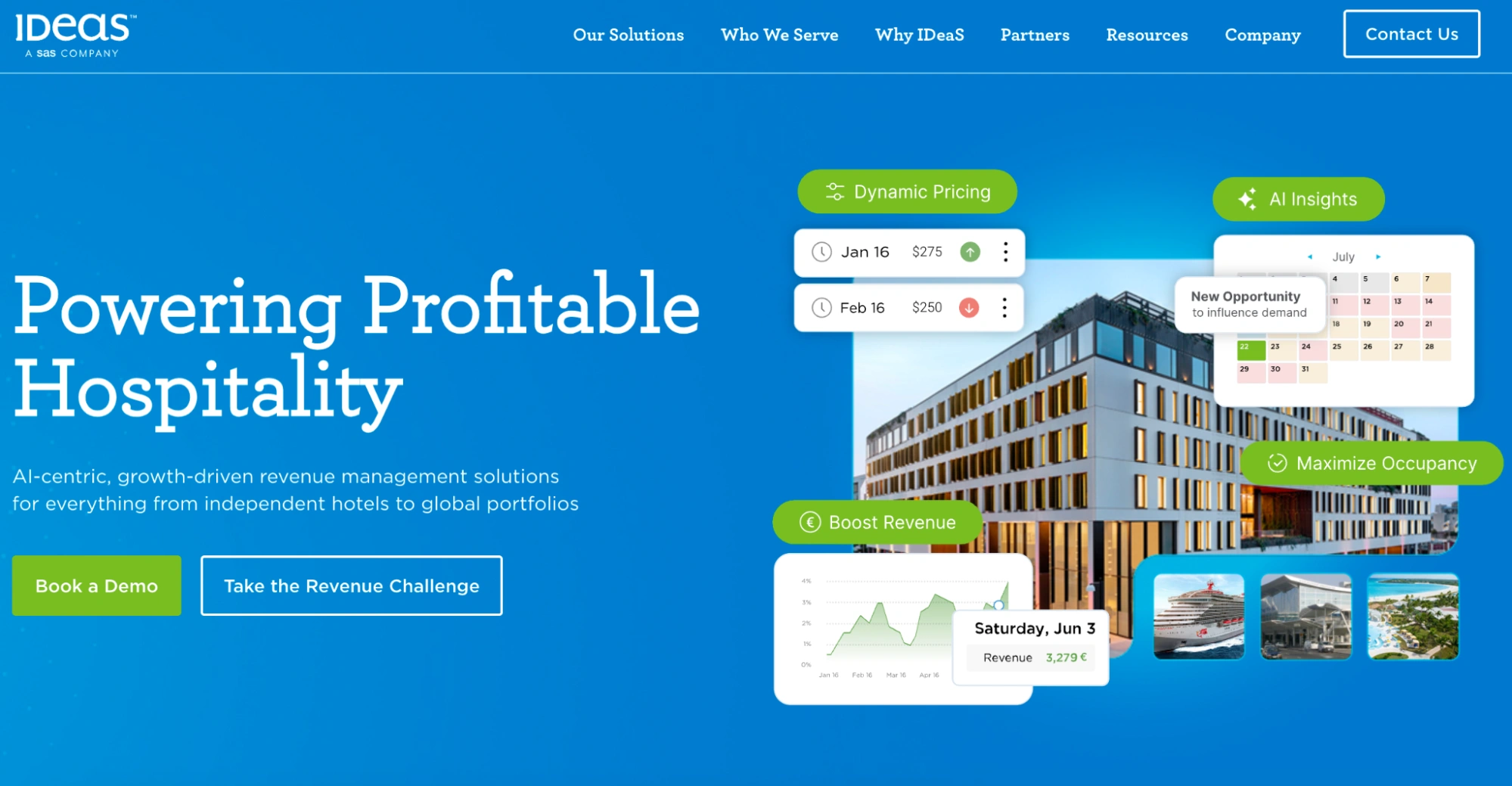
IDeaS G3 Revenue Management System helps hotels increase revenue through automated decision-making and a continuous pricing model. Its advanced analytics and machine learning analyze travel demand, competitive data, and consumer sentiment to set near-perfect real-time rates, boosting revenue and occupancy.
The continuous pricing model dynamically adjusts rates to capture periods of high demand and optimize off-peak pricing. IDeaS also handles group business optimization by analyzing patterns and adjusting pricing and allocation, increasing profitability from group bookings. Hotels using IDeaS report revenue gains up to 17% and occupancy improvements up to 10%.
Pros
- Optimize pricing dynamically with continuous pricing
- Analyze demand, competition, and guest sentiment for revenue decisions
- Manage group bookings to increase profitability
Cons
- The initial setup can take some time for new hoteliers
- Manual training is time-consuming
Pricing
- Custom pricing
5. Lighthouse
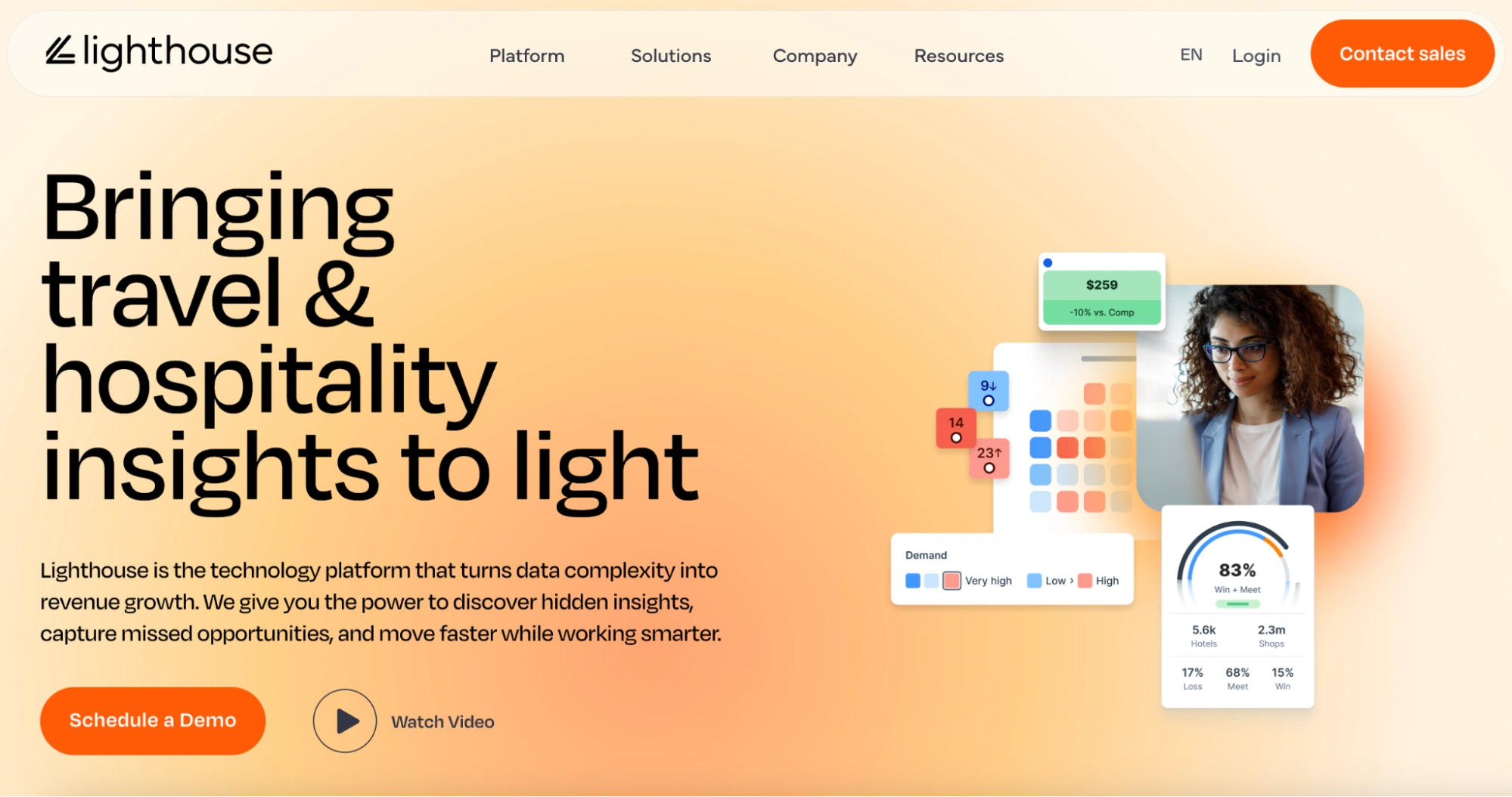
Lighthouse’s team of revenue professionals drives growth by managing rates, inventory, and digital strategies, letting hotels focus on guests. The platform centralizes reporting across multiple systems and automates analytics for faster, data-driven decisions. Lighthouse creates custom consulting services to meet each hotel’s unique needs and manages digital campaigns to maximize return on investment.
Its experts provide ongoing training, task force support, and strategic advice to boost performance and close service gaps. Hotels benefit from a holistic approach that combines industry insights, cutting-edge technology, and hands-on expertise to increase bookings, optimize revenue, and strengthen long-term growth.
Pros
- Deliver custom consulting tailored to hotel needs
- Provide expert guidance and ongoing training
- Centralize multi-platform revenue data for streamlined strategy
Cons
- The current version of the platform lacks a multi-hotel view
- The customer service is not up to the mark compared to other tools in the list
Pricing
- Custom pricing
6. RateGain
The RateGain Navigator helps hotels make smarter, faster pricing decisions with AI-powered revenue intelligence. Its multi-source market scanning collects data from over 1,100 sources, including 800+ OTAs, brand sites, and metasearch platforms. Navigator cleans, matches, and validates this data to provide accurate, real-time rate intelligence.
The platform synthesizes competitor pricing, parity violations, and demand shifts into unified dashboards, giving commercial teams actionable insights. AI models detect underpricing, overpricing, and parity leaks, and predict demand surges to optimize rates proactively. The Navigator also integrates seamlessly via APIs with RMS and BI systems, centralizing data for streamlined decision-making.
Pros
- Clean and match data for real-time actionable insights
- Integrate with RMS and BI systems via flexible APIs
- Centralize dashboards for unified commercial intelligence
Cons
- Some users experienced slow synchronization speed
Pricing
- Custom pricing
7. RoomPriceGenie
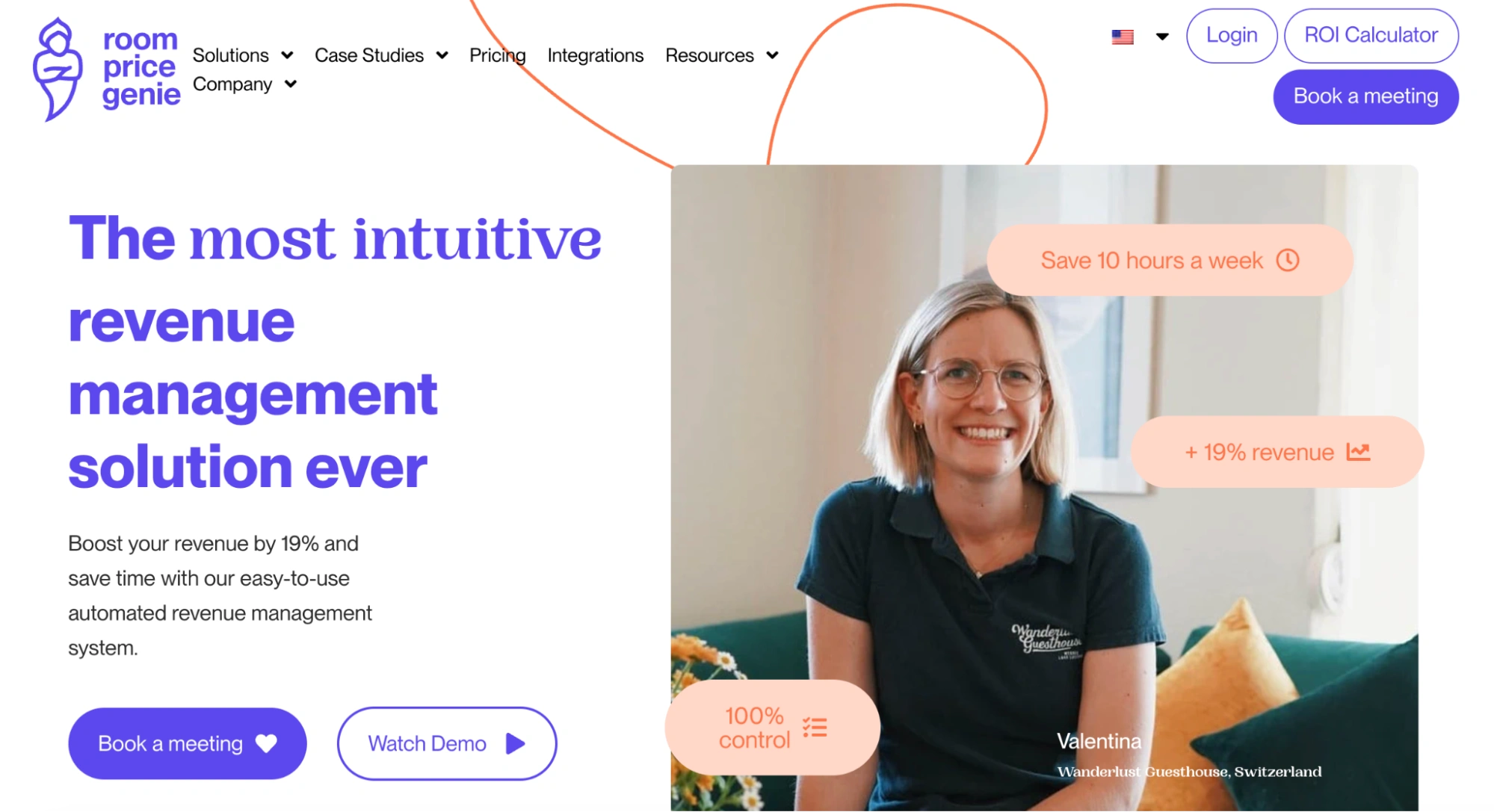
RoomPriceGenie helps hotels increase revenue and save time with automated, intuitive revenue management. Its system adjusts room prices up to 12 times a day based on real-time demand, booking pace, competitor activity, and local events. The platform tracks booking performance, predicts demand patterns, and optimizes pricing to maximize profit.
Hotels define minimum and maximum rates, room types, and seasonal cycles while RoomPriceGenie runs automatically in the PMS or channel manager. The system provides 18 months of future pricing and combines forecasting and budgeting tools to help managers plan confidently. Independent hotels, B&Bs, groups, and short-term rentals use RoomPriceGenie to fill calendars with profitable bookings.
Pros
- Automate dynamic room pricing in PMS or Channel Manager
- Track competitor rates and market shifts
- Monitor booking performance and detect demand patterns
Cons
- The platform offers limited advanced customization options
- Some users say the platform isn’t yet compatible with specific PMS
Pricing
- Starter: $142/month per property (for 20 properties)
- Advanced: $191/month per property (for 20 properties)
- Professional: $479/month per property (for 20 properties)
Key AI Features to Look For in a Hotel RMS
Choosing the right AI-powered revenue management system determines whether your hotel maximizes revenue or misses opportunities. Here’s what to prioritize when evaluating an RMS:
- Predictive demand forecasting: Look for AI that analyzes historical data, market trends, events, and booking patterns to predict occupancy and revenue. Accurate forecasts help your team price proactively and capture demand.
- Dynamic pricing optimization: The system should adjust room rates automatically in real time based on demand, occupancy, competitor activity, and booking pace. This feature maximizes revenue without manual intervention.
- Parity and rate monitoring: Seek tools that detect rate discrepancies across OTAs, direct channels, and your PMS. Identifying and correcting parity issues protects your revenue and brand integrity.
- Market intelligence and competitor analysis: The RMS should continuously track competitor pricing, market trends, and demand shifts. Actionable insights from these analyses guide strategic pricing and promotional decisions.
- Segmentation and personalization: AI that segments guests and identifies behavior patterns lets you tailor pricing strategies and offers to different guest types, improving profitability and guest satisfaction.
- Integration and reporting: Ensure the system integrates with your PMS, CRS, and BI tools while providing unified dashboards, alerts, and actionable recommendations for revenue teams.
Benefits of Using an AI Revenue Management System
AI‑driven RMS platforms give hotels a measurable competitive edge by automating pricing, forecasting, and decision‑making. Hotels that adopt AI report clear financial and operational gains compared with traditional, manual revenue management approaches.
Let’s take a look at some of the key benefits of using an AI revenue management system:
- Increase overall revenue: Hotels using AI RMS report up to 17 % higher total revenue vs. non‑AI users because systems adapt pricing to real‑time demand and market signals. These systems analyze booking patterns, seasonality, competitor pricing, and local events to automatically recommend optimal rates, allowing hotels to capture more revenue during peak demand and reduce revenue loss during slower periods.
- Strengthen competitive positioning: AI systems continuously analyze competitor rates and market trends, enabling hotels to respond quickly to shifts and capture demand opportunities.
- Boost RevPAR and ADR: Properties with AI-powered dynamic pricing see up to 35% increases in revenue per available room (RevPAR) and higher average daily rates. By continuously monitoring market conditions and adjusting rates by room type, channel, and booking window, AI helps hotels maximize both occupancy and profitability without constant manual intervention.
- Improve forecasting accuracy: AI models improve demand predictions by 20% or more compared with legacy methods, helping teams plan staffing, pricing, and inventory effectively.
- Enhance operational efficiency: Hotels using AI technologies reduce manual tasks and free revenue managers to focus on strategy and guest experience. Automated rate updates, reporting, and dashboards eliminate repetitive work, allowing teams to spend more time on initiatives that drive revenue, improve guest satisfaction, and coordinate marketing campaigns.
How to Choose the Right AI RMS for Your Hotel
Selecting the proper AI‑powered RMS determines whether your hotel captures market demand and maximizes revenue or falls behind competitors. The right system should match your property’s size, market dynamics, and revenue goals.
Here are the key considerations revenue managers and hotel owners should evaluate:
1. Understand your hotel’s needs
Start by defining your business goals, revenue objectives, and operational challenges. Independent hotels may prioritize ease of use and automation, while hotel groups or resorts need centralized control and scalability across multiple properties.
Tailoring your RMS selection to your hotel’s structure and market conditions increases long‑term value.
2. Evaluate forecasting and dynamic pricing
Choose a system with real‑time dynamic pricing and predictive demand forecasting models.
A robust RMS analyzes market, historical, and competitor data to adjust pricing quickly, giving your hotel a strategic pricing advantage in fast‑moving markets.
3. Check integration capabilities
Your RMS must integrate seamlessly with your PMS, CRS, channel manager, CRM, and distribution channels.
Reliable integrations allow real‑time data sharing and eliminate errors that arise from siloed systems, improving pricing decisions and distribution efficiency.
4. Assess reporting and analytics
Look for intelligent reporting, alerts, and data visualization tools that help teams quickly understand performance trends and respond without delays.
Dashboards should present key KPIs like RevPAR, ADR, and occupancy in actionable formats.
5. Prioritize usability and training
A user‑friendly interface reduces onboarding time and boosts adoption.
Request demo access or free trials to test how intuitive the system feels for your team, how easily they can run simulations, and how clearly the platform communicates insights.
6. Consider scalability and support
Your RMS should grow with your business, whether you manage one property or a portfolio.
Choose a provider that offers ongoing support, training resources, and regular updates to keep your system current with evolving market needs.
Get the Most Out of Your Revenue Management Software
The hotel industry faces fierce competition, making effective revenue management more critical than ever. A hotel revenue management system like the ampliphi RMS analyzes demand and market signals continuously, giving you control over your pricing strategy.
Once you set your strategy, the system automatically updates rates in real time as market conditions change, eliminating the need for daily manual adjustments. It integrates seamlessly with your PMS and channel managers, adding AI-powered insights that sharpen your pricing decisions. This automated platform lets your team react quickly and intelligently to shifting demand, increasing profitability without extra work.
Book a demo today and experience how ampliphi RMS software drives results.
FAQs
What is the best AI revenue management system for hotels?
The best system depends on hotel size and goals, but leading platforms like ampliphi RMS combine automation, forecasting, and real-time insights to support smarter pricing decisions.
How does AI improve hotel revenue management?
AI improves pricing accuracy by using accurate forecasting, continuous learning, and real-time data to respond instantly to demand shifts.
Is AI RMS better than traditional RMS?
AI outperforms legacy tools by analyzing more variables and reacting faster, which improves pricing consistency and profitability.
Which RMS is best for small hotels?
Smaller hotels (along with hotel groups, B&Bs, motels, and resorts) benefit from AI systems such as ampliphi RMS that simplify pricing, integrate seamlessly with channel management, and minimize manual input. This lets owners focus on operations and guest experience while the software handles revenue optimization.
What features should an AI RMS have?
Strong revenue management systems include automation, forecasting, dashboards, and tracking of key metrics across channels.
What integrations do leading AI revenue management systems offer for hotels?
Top platforms connect with PMS, channel managers, and other tools that support hotel operations and real-time market data.
What are the key benefits of using AI in hotel revenue management software?
AI helps hotels analyze data, forecast demand, improve profitability, and respond faster to market changes.