

TL;DR
|
Do you ever feel like your day runs ahead of you as a hotel revenue manager?
If so, what does “busy” really look like for you?
- You have a full plate, with clear priorities and steady control over your day,
- or you are constantly occupied, jumping from task to task, with little time to think or reset.
These two experiences may sound similar, but they feel very different in practice. One keeps you focused and effective. The other slowly drains your energy and takes a toll on your results and mental health.
The good news is that it doesn’t have to stay this way. With the right hotel time management tips, you can take back control of your schedule and make space for the work that truly matters.
In this guide, we will share practical tips for time management that help you stay organized, think clearly, and move through your day with more confidence and less stress.

Why Time Management Matters in Hotels
In hospitality, staying busy is almost expected. There are reports to review, rates to adjust, and market changes to respond to. Your team depends on your input, and your decisions carry weight.
Howeverm without a clear approach to managing your time, even small tasks can start to pile up, creating stress and leaving little room for strategic thinking. Learning how to manage your time effectively can help you stay on top of daily demands while making room for planning, analysis, and leadership.
1. Increased productivity
One of the biggest benefits of good time management is simply getting more done without burning out. A global study of over 1,200 hotels found that nearly 9 out of 10 operators save between 2 and 10 hours each week by using modern property management systems (PMS) to automate routine tasks. Some hotels even reclaim more than 500 hours of labor each year.
These savings come from streamlining check-ins and payments, updating room statuses faster, replacing manual workflows with digital ones, and simplifying reporting. With these hours freed up, you and your team can focus on higher-value work, like optimizing revenue, improving guest experiences, and planning for the future.
2. Reduced stress
When tasks are organized and priorities are clear, the constant pressure of day-to-day operations becomes easier to handle.
As we saw earlier, structured time management strategies help you feel more in control of your day rather than constantly managing deadlines. That clarity means fewer last‑minute rushes, less stress, and more calm during peak periods.
3. Smarter use of automation
Revenue managers increasingly rely on automated tools to handle repetitive work, like updating rates across channels or tracking competitor pricing. When manual tasks are taken off your plate, you have room to focus your expertise where it matters most.
As a result, you get better hotel demand forecasting and fewer rushed pricing tweaks throughout the day. Put simply, automation gives you mental space to think strategically rather than constantly react.
4. Better decision-making
Having time to step back from screens and reports lets you interpret data rather than just collect it. When clutter is reduced from your day, you can analyze booking patterns, adjust forecasts thoughtfully, and test pricing strategies that make a real impact on your numbers.
This is where revenue management becomes proactive instead of reactive, helping you stay ahead of demand rather than simply responding to it.
5. Improved work-life balance
Managing your schedule well doesn’t just help at work. It also creates space for breaks and your personal life, helping you recharge and stay energized.
When you have room to rest, you bring more focus and clarity to your role. A well‑balanced manager sets the tone for a more grounded, productive team.
What Good Time Management Looks Like in a Hotel
For a revenue manager, every minute has a direct impact on the bottom line. How you manage time can influence revenue per available room (RevPAR), ADR, and occupancy rates, while also affecting how smoothly your team executes pricing and forecasting strategies. In fact, hotels using modern revenue management systems (RMS) saw up to a 35% increase in RevPAR when managers optimized time for strategic decisions.
Even with that in mind, the daily reality can be unpredictable. You may start with a plan, but guest requests, sudden market changes, and team questions can throw everything off. It’s easy to feel like you’re reacting constantly instead of leading your day.
Good hotel time management tips help you focus on the right tasks, accomplish tasks efficiently, and reduce stress. Here’s what that looks like in practice:
1. Start with clear communication
Clear communication is the foundation of effective time management. When your team knows exactly what is expected, less time is wasted clarifying instructions. Creating a to-do list can help hotel managers organize their tasks effectively, whether it’s updating competitor rates or preparing forecast reports. Sharing it with their team keeps everyone on the same page.
Using a digital rate calendar can also help hotel staff keep track of deadlines for submitting reports, updating pricing, or reviewing dashboards. Simple check-ins and concise briefings keep everyone focused and reduce common time-wasters.
2. Prioritise the right tasks first
Not every task has an equal impact on revenue. Effective prioritization requires distinguishing between what is important and what is urgent.
For example, dynamic pricing for high-demand dates may take precedence over routine occupancy reporting. Tools like the Eisenhower Matrix can help you schedule time for specific tasks, so you can accomplish tasks efficiently and avoid feeling overwhelmed.
Taking a few minutes each morning to plan priorities can save hours over the course of a week and ensure key decisions aren’t delayed.
3. Delegate clearly and define responsibilities
As a revenue manager, you can’t, and shouldn’t, do everything yourself in a busy independent hotel. Delegating tasks can free up time for more critical responsibilities, like forecasting and budgeting.
Clearly defining who handles data pulls, rate checks, or report compilation prevents overlaps or confusion. This way, you can manage your time better and focus on tasks that require your direct attention.
It also improves accountability and lets team members complete tasks independently without constant oversight.
4. Reduce micromanagement without losing control
It’s tempting to constantly check spreadsheets or override rate decisions, but micromanaging slows productivity. Avoiding multitasking can improve focus and productivity, and letting your team take ownership of routine revenue tasks keeps operations running smoothly.
Checking in at key milestones rather than at every update gives you time for high-value strategic activities, where your decisions have the greatest impact on revenue.
5. Train teams properly to save time later
Investing time in training might feel like a detour from daily operations, but it pays off in efficiency later. Training teams properly to save time later enables staff to handle routine tasks such as reporting, rate updates, and dashboard maintenance independently.
Introducing them to revenue management hotel software and time management techniques helps the team stay focused and spend time wisely.
Use Technology to Reduce Wasted Effort
Revenue managers spend a lot of time on repetitive tasks. Manually checking competitor rates, compiling reports, updating pricing spreadsheets, and monitoring booking pace can quickly eat up hours in your day. When that happens, it’s easy to feel like you’re working hard but never getting ahead.
Using technology wisely can reclaim your time, help you accomplish tasks, and let you focus on high-value decisions that actually drive revenue.
One example is an AI-powered revenue management system like ampliphi, which automates routine pricing tasks while giving you clear, actionable insights. In 2025, hotels adopting AI-driven pricing tools reported up to a 35% improvement in RevPAR and a 40% reduction in manual pricing work.
A. Real-time price optimization

Amid constant market fluctuations, your rates need to reflect demand instantly. ampliphi uses its dynamic pricing engine to recommend rate changes based on real-time data, historical trends, and live market shifts.
Instead of reviewing multiple reports, you see pricing recommendations directly and can apply them to your pricing calendar. This removes the need for constant manual updates, giving you more time to focus on strategy rather than execution.
B. Competitor monitoring
Keeping an eye on competitors is essential, but doing it manually across OTAs and dates is time-consuming. ampliphi simplifies this through its Competitor Insights Module.
You can see how your hotel ranks against competitors based on pricing, whether you are comparing the lowest available rate or the average rate across channels. The OTA Rate Comparison Matrix and per-OTA Breakdown show exactly how each competitor is priced across platforms such as Booking.com and Expedia.
Instead of checking multiple sites, everything is visible in one place. The system also highlights pricing changes with Smart Alerts in the Pulse View, so you know when a competitor significantly drops or increases rates. This way, you stay informed without constantly monitoring.
C. Centralized rate calendar
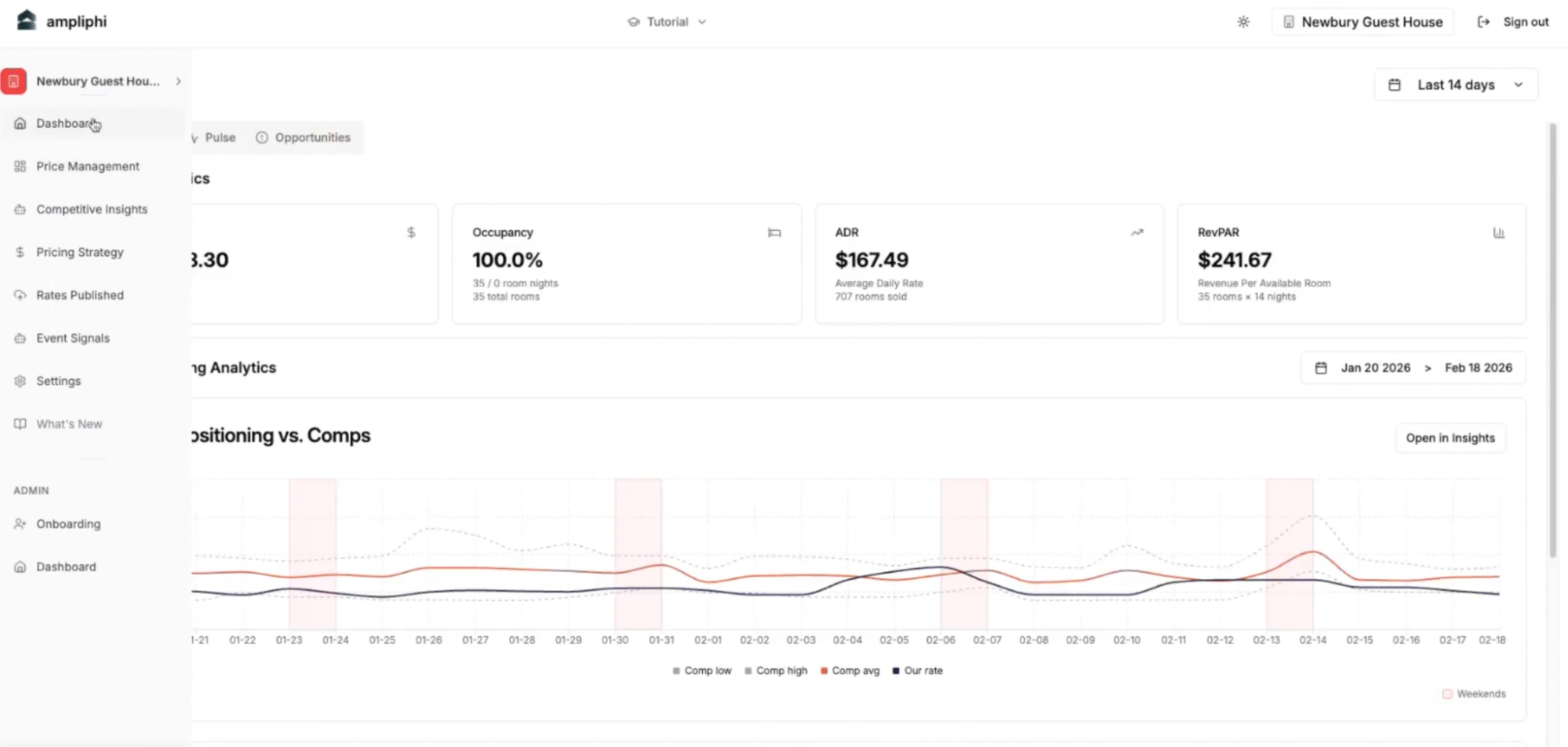
A scattered pricing workflow slows you down. ampliphi brings everything together through its pricing calendar and dashboard.
You can review pricing recommendations, apply changes for single or multiple days, and align them with your strategy in one place. The Dashboard View combines key metrics such as revenue, occupancy, ADR, and RevPAR with a forward-looking market view, so you do not have to switch between tools.
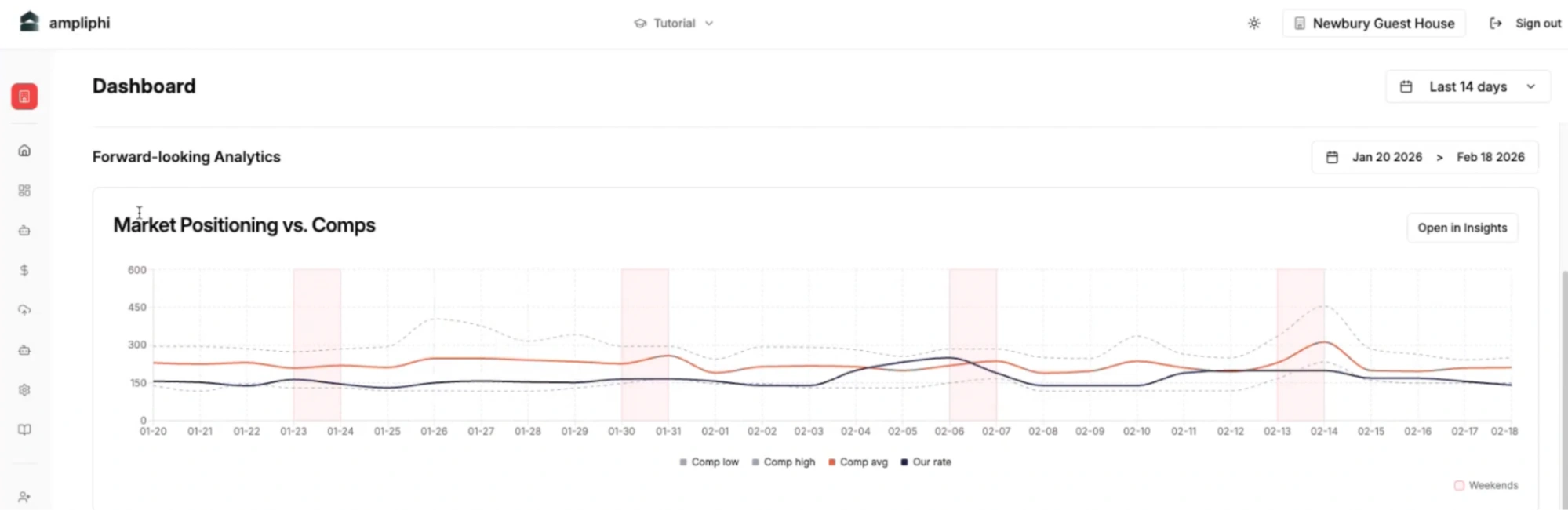
This centralized setup helps you prioritize faster, reduce back-and-forth, and stay consistent in your daily decisions.
D. Dynamic pricing and AI optimization
Dynamic pricing works best when it connects to real market signals. ampliphi combines its pricing engine with event-based demand insights and competitor data to guide your decisions.
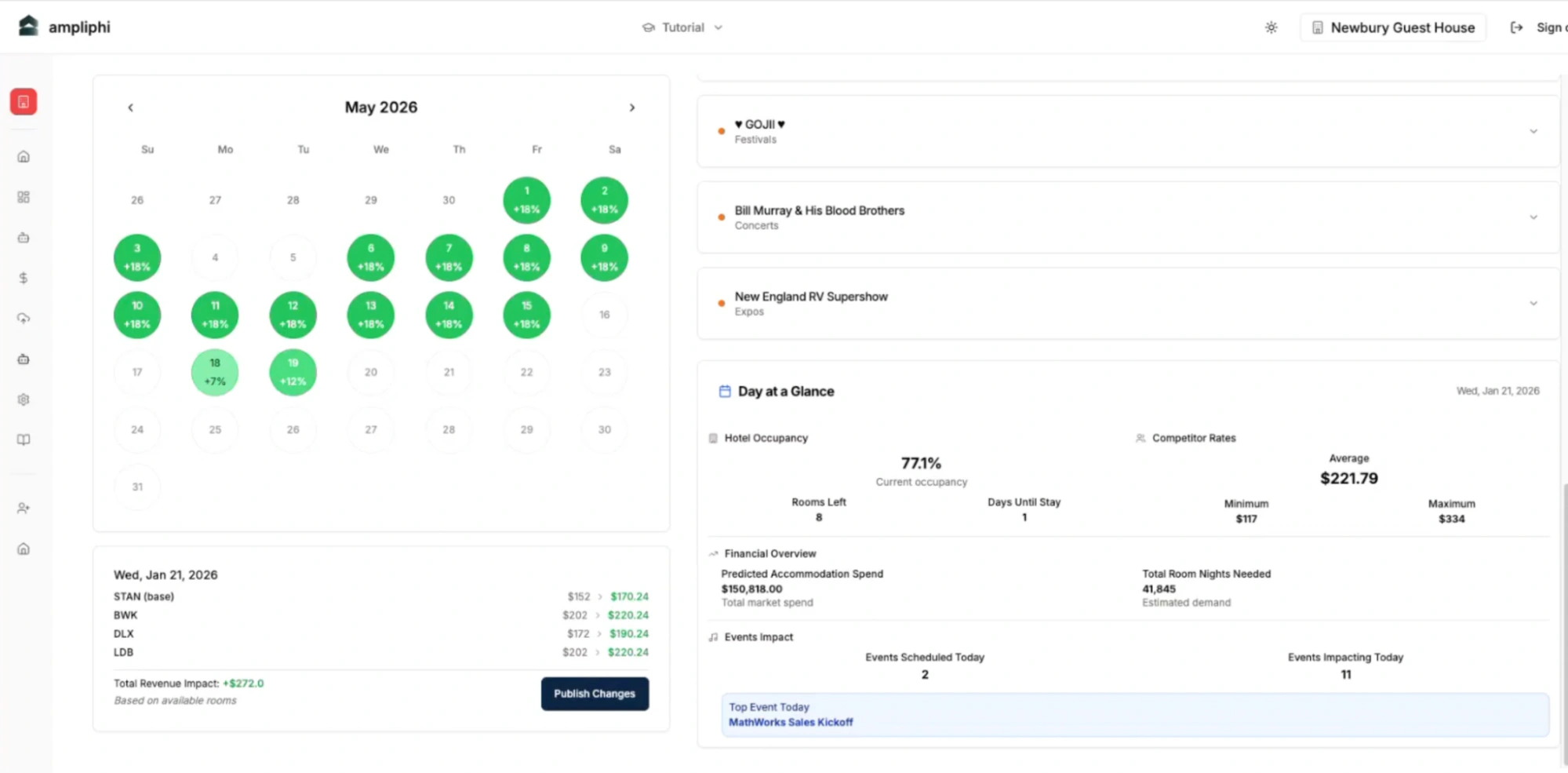
Through the Events Module, you can see upcoming events, expected attendance, distance from your property, and their likely impact on demand. The Day at a Glance View summarizes total demand, estimated room nights, and financial impact in one place.
Instead of reacting after demand spikes, you adjust pricing earlier while demand is still building. Over time, this reduces the number of rushed decisions, improves consistency, and helps you use your time more effectively.
Real Hotel Time-Management Habits That Work Daily
A busy day in hotel revenue management rarely slows down on its own. The difference lies in how you structure it.
When your day has a clear direction, even high-pressure moments feel manageable, and your decisions become more intentional instead of reactive.
- Start your day right: Begin with a quick review of your to-do list. Identify the few tasks that will actually impact revenue, such as pricing decisions or demand reviews. This keeps your focus sharp from the start.
- Plan ahead: Next, map out your priorities for the week, especially around high-demand dates, events, or reporting cycles. When you plan ahead, you avoid last-minute rush and make space for better decisions.
- Track your time: Use a simple time log to understand where your hours go. You may notice patterns, such as spending too much time on manual checks or reports, which helps you adjust your workflow.
- Set time limits: Give each task a clear time boundary. This prevents overthinking and keeps your day moving forward without unnecessary delays.
- Avoid time wasters: Long meetings and unclear communication can quickly drain your time. Keep discussions focused and actionable so your team stays aligned without slowing down progress.
- Stay focused: Create a work environment that supports concentration. Fewer distractions and dedicated focus time help you think clearly, act faster, and manage your day with more control.
Common Time-Management Mistakes in Hotels
Even with the best intentions, it’s easy to fall into habits that quietly drain your time. And the tricky part is, most of them don’t feel like mistakes in the moment.
1. Trying to do everything yourself
As a revenue manager, it’s tempting to stay involved in every rate check, report, or update. You want accuracy, and you trust your own process.
But when you handle everything yourself, you limit the time you have for forecasting and strategy. Delegating routine tasks gives you space to focus on decisions that actually move revenue.
2. Multitasking across pricing and reports
Successful multitasking, contrary to many people’s beliefs, is a difficult skill to master, and, in most cases, it will not be worth your time. Switching between dashboards, rate updates, and emails might feel efficient, but it actually breaks your concentration and increases the chance of missing something important.
When you focus on one task at a time, your decisions become sharper, faster, and more confident.
3. Spending too much time on manual rate checks
Manually reviewing competitor rates or compiling reports can take up a large part of your day. It feels necessary, but it limits your ability to think ahead.
In fact, 17% of hotels save hundreds of hours annually by reducing manual work. That is time you could use to refine pricing strategy instead of repeating routine checks.
4. Not setting clear priorities
When everything feels urgent, it becomes harder to focus on what actually drives revenue.
Without clear priorities, you spend time on low-impact tasks while high-impact pricing decisions get delayed.
5. Reacting to market changes too late
When your day is filled with small tasks, you end up reacting instead of planning. By the time you notice demand shifts or competitor moves, the opportunity has already passed.
This keeps you in a constant catch-up cycle.
6. Overchecking data and pricing decisions
Reviewing data is important, but checking the same numbers multiple times does not add value.
It often comes from wanting control, but it reduces the time available for actual analysis and decision-making.
How Independent Hotels Can Improve Without Overcomplicating Things
Are you managing your day, or is your day quietly managing your revenue decisions?
By now, you have a clear set of time management habits that can help you take back control of your schedule, reduce daily pressure, and focus on the work that actually drives results. But even the best habits can only take you so far if your time is still tied up in manual checks, scattered data, and constant switching between systems.
Strong time management for revenue managers depends on how easily you can access insights, respond to changes, and act without friction. When your workflow is clear, and your data makes sense instantly, your decisions become faster and far more effective.
This is where an AI-powered RMS like ampliphi makes a real difference. It brings your market intelligence, competitor insights, and pricing decisions into one place, so you spend less time chasing information and more time acting on it. With features like real-time alerts, forward-looking dashboards, and event-driven demand insights, you stay ahead of changes instead of reacting late.
Ready to take control of your time and your revenue strategy? Book a demo today to simplify your workflow, focus on what matters, and turn every decision into measurable impact.